
Chocolate Guinness Cake and Disaster Relief Donations

Back in 2008 I posted about  a cake I made that richocheted around Twitter, much to my amusement. With St. Patrick’s day coming around, I thought I would repost it, but with a twist. Just a small echo to the culture of love as people respond to the earthquake in Japan.

If you like the cake, the idea, the beer – whatever – donate to help the good folks of Japan who are suffering so much from the earthquake, Tsunami and nuclear challenges. I’ve copied in a list of donation options for you. Thanks in advance. Below the donations information is a snipped of the original post and a link to the recipe.

Bake. Do good.

Aid and Charitable Organizations From the NY Times

Each of the following groups have set up fundraising sites specifically for the victims of Friday’s earthquake and tsunami.

AMERICAN RED CROSS
Red Cross officials say donors can text REDCROSS to 90999 and a $10 donation will automatically be charged to donor’s phone bill, or donations can be made directly on its Web site.

AMERICARES
Information is available on the organization’s Web site.

CARE
CARE is one of the world’s largest private international humanitarian organizations. Their offices in Asia are on high alert and have ensured that staff are informed of the tsunami warnings and other related developments.

DOCTORS WITHOUT BORDERS
Information is available on the organization’s Web site.

GLOBALGIVING.ORG
GlobalGiving is working with International Medical Corps, Save the Children, and other organizations on the ground to disburse funds to organizations providing relief and emergency services to victims of the earthquake and tsunami. Donors can text JAPAN to 50555 to give $10, and larger increments can be submitted on GlobalGiving’s Web site.

INTERNATIONAL MEDICAL CORPS
Information is available on the organization’s Web site.

LIONS CLUBS INTERNATIONAL
Information is available on the organization’s Web site.

THE SALVATION ARMY
The Salvation Army has been providing food and shelter to Tokyo commuters who were stranded when public transportation was interrupted by the earthquake. They are to send a team to Sendai, a city about 250 miles Tokyo, to assess the situation there. Text JAPAN or QUAKE to 80888 to make a $10 donation. (Make sure to respond “YES” to the Thank You message you receive.) Donations can also be made on the organization’s Web site or by calling 1-800-SAL-ARMY.

SAVE THE CHILDREN
To make a donation, visit Save the Children’s Web site, call 1-800-728-3843, or text JAPAN to 20222 to donate $10.

SHELTERBOX.ORG
Shelterbox.org is a disaster-relief organization that focuses on providing survival materials such as tents and cooking equipment to families displaced by disasters.

UJA-FEDERATION OF NEW YORK
Information is available on the organization’s Web site or by calling (212) 836-1486.

Repeat. Bake. Do good.

I was making a chocolate Guinness cake last night, and I was trying to figure out how to weave it in with the rambly theme of my blog. After all, this isn’t a food blog, as much as I love food.

I had tweeted that I was going to make this cake in celebration of our finally naming “the book,” and I was amazed how many people wanted the recipe. I kept sending the recipe url to people who tweeted in reply.

It is interesting what captures our attention, what stimulates us to want to experiment.

Is it the chocolate? The Guinness? The cake? Cooking? Food? In any case, the interest prompted me to blog about the cake. Oh, and the cake is really good – though I’d suggest using a little less butter. I added some grated unsweetened coconut and I’d suggest adding some chopped, roasted pecans as well. I substituted mascarpone for the cream cheese in the icing (because that’s what I had on hand) which makes a subtler icing. I think I’d prefer the cream cheese!

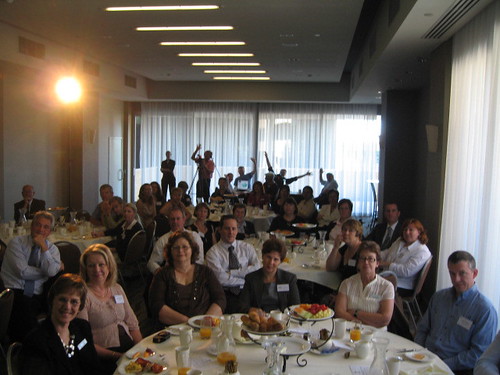
Crosspost from NWWCoP: Twitter Chats and Tweetups

This is a crosspost from the Network Weavers Community of Practice!

On today’s full community “share fair” meeting the concept of tweetups and tweet chats came up. I mentioned that there is an open Google doc listing some of the more well known tweetups and I would share it, so I wanted to post that link and a few others here. In poking around, I found a few more lists (Meryl’s list was updated just last week!) and resources.

How to Run Twitter Chats

There are both technical and facilitation things to consider to effectively pull people into a coherent interaction on Twitter.

Hashtags Resources

A hash tag (i.e. #nwwcop) is a way to aggregate tweets during a tweet chat and to aggregate tweets with other digital content with the same tag.

How to Capture the Content of Twitter Chats

Here are just a few of the tools you can use as interfaces for the tweet chats themselves and to aggregate the content. See the “how-tos” above.

Strategy

I think the last bit of thinking — that really might be best considered first — is thinking about WHY you want to do a Twitter chat. Thinking about intent, about purpose, can be a productive precursor to planning and action. Smile. Visit some twitter chats. Experience them. Then think about your community and network. What would work? Twitter chats are inherently open – is that ok for you? Do you want to have a defined group, or attract people to the twitter chat topic? Food for thought, eh?

Communities and Networks in New Zealand and Australia

I head down under in a couple of weeks to run a series of events in Napier, NZ (url soon), Wellington, NZ, Sydney and a free event that evening (Cracking the Door Open – Nancy White (4 April 2011) « NSW KM Forum), possibly Adelaide (to be confirmed soon), Canberra and Melbourne (two more events besides this one – urls soon!). If you are in the vicinity, I hope you might consider joining us.

In preparation, my co-conspirator, Matt Moore, and I made a couple of videos you might enjoy. Just a bit of fun.

YouTube – mattbm34’s Channel.

Twitter Thanks and Social Media and Public Health

Months ago I got an email from Trish at PKids, an organization devoted to childhood immunization and disease prevention, asking if I’d do a webinar in the way off future of February. Well, today was the day. Last week in preparation I realized I had to get my act together. With most of my current experience in international development and my maternal/child health days nearly 15 years old, it was time to tap my network. So before I share the slides I want to send a Twitter thankyou/shout out to all the people who provided retweets, links and information. You are the best, @eekim, @stephenjdowns,  @SusannahFox, @epatientdave , @garyschwitzer, @SocMediaRckStr, @RavennaBlog, @CAPublicHealth, @paularobeson, @eqpaho, @CDCgov and all you other social media health geeks!

Here are the slides and attached is a PDF file with the slide comments (WhyMeWhyOnlinePKIDSFinalwnotes) which capture the basic narrative of the presentation. If you register on the PKIDS site, you can also access the recording of the webinar.

via Why me? Why Online? Social Media and Public Health.

Heading Back Down Under: Part 1 Australia

In late March through mid-April I’m heading to New Zealand and Australia to learn, lead and co-lead workshops and generally CONNECT. The Australian batch comprises at least two different things. Here is the first, which I’m doing with the fabulous Matt Moore.

Here is the description and information:

Sydney, Brisbane and Melbourne Workshops

Five years ago, the job title “online community manager” was rare. It was an addition to someone’s existing job, or they simply volunteered. Today, every organisation has or wants an online community (whatever that means). We are working both with bounded communities and broad, diverse networks. We need to be more deliberate in how we integrate community strategies into the heart of our organizations, how they impact our real work, and how they shape our organizations.

Smart organizations are asking:

  • What new strategies are emerging for the use of communities and networks?
  • What are the emerging practices of community & network management?
  • How do we work with both externally and internally facing communities?

Join us as we take a practical and forward looking examination of community & network practices. This in-depth, one-day workshop is aimed at practising online community managers and will tackle issues such as:

Upfront and personal. Social media offers new opportunities to work with customers, citizens and other external stakeholders. With social media employees can collaborate with each other in new ways. How does employee work flow change with greater external stakeholder contact? What does this mean for geographically distributed virtual partnerships? How do we avoid creating more work for ourselves than we can handle?

Multi-membership and it’s evil twin, platform proliferation. The heaven and hell of our context today is that anyone can create a space for a community or network, and technologists are inventing new ways to support these groups every day. We have more opportunities than people have time, attention and capacity to engage in. What does this mean for organizations’ online strategies? For the people stewarding both technology and process? How do we balance the needs of our community members for both variety, usefulness and consistency in this complex environment? And to repeat an important question, how do we avoid creating more work for ourselves than we can handle?

Format

Our format will be deep engagement with no more than 25 participants. We’ll offer some pre-reading prior to the workshop, then dig in with a blend of presentation, demonstration and practice. Our goal is to attract the smartest and most engaged community managers and online thinkers, so significant time will be allowed for participants to learn from each other and co-create solutions. Your output for the day will be a set of strategic questions to take back to your organization for planning your online engagement trajectory, ideas or “sketches” of potential experiments or actions, and a deeper connection with other practitioners.

Bring your mobile or smart device (or borrow one!) — “social sharing” is encouraged. Tweet, blog, Flickr etc. We do ask that everyone be explicit if they say something they do not want made public.

Coffee, lunch and snacks (including chocolate) will be provided. An optional, no-host drinks and social dinner will follow to support continued conversation. We encourage you to join us for the evening’s informal part of the day. We all know that’s where the really interesting conversations emerge!

Who Should Attend

Practicing online community managers, facilitators or similar functions. Technology stewards who provision and support technology for communities or networks. Organizational leaders with responsibility for online interaction goals or processes. While this is not an introduction to online communities or online community management, motivated and interested participants with less experience are welcome if they come in the spirit of a deep dive!

Your Workshop Hosts

Nancy White is an internationally recognised online facilitation expert-practitioner. She has worked with organisations as such as: The United Nations; Australian Flexible Learning Network; Boeing; the Consultative Group on International Agricultural Research; IBM; and the World Bank. She is co-author of Digital Habitats with Etienne Wenger and John D. Smith. Nancy blogs at http://fullcirc.com/wp/ as well as teaches, presents and writes on online facilitation and interaction, social architecture and social media . Nancy confesses to online interaction, learning and chocolate addictions.

Read about Nancy’s 2009 Australia visit.

Matt Moore has worked developing face-to-face and virtual communities with organisations such as IBM, Oracle and the Australian Securities and Investments Commission. He is currently a director of Innotecture and occasionally teaches at University of Technology Sydney.

Costs and Registration

All the workshops will be held in locations that are easily accessible from the CBD of each city. Each workshop costs $500+GST per participant. Please use PayPal to book with Visa/MC or contact us for alternative payment options.

Sydney (Monday 4 April 2011): Book now
Brisbane (Wednesday 6 April 2011): Book now
Melbourne (Monday 11 April 2011): Book now

If you pay and then subsequently cannot attend, we cannot provide you with a refund but an alternative participant from your organisation can be nominated.