 Last week Tony Karrer and I launched the Communities and Network Connection, a place to bring together and surface good stuff about communities, networks and all the juicy stuff around them. Tony continues to tweak the code behind it and one of the outputs is a hot list of the posts that got the most “social juice.” Tony explains how it works for one of the other aggregated sites he stewards, the eLearning Technology site. Check out Hot List : eLearning Technology
Tony explains:
In other words, we are using what is happening:
- with the content out in the network
- on the eLearning Learning
- searches that land on us and that occur on the site,
- and various other kinds of behaviors.
Together these social signals indicate that the content is likely of higher quality (or at least of higher interest). Thus it belongs in both a best of list and a hot list. This is going to take some work to get it right, but we believe it will help to highlight various hot list content.
We are particularly excited that this capability will soon allow us to have a weekly post that highlights hot list for the week. This will be something like:
Posts:
- Branding in the age of social media
- Clay Shirky: nonprofits must become new-style convenors – or lose their members
- Assessing the health of a community of practice using net promoter score
- Mathemagenic ” PhD conclusions in a thousand words: blogging practices of knowledge workers
- From Command and Control to Collaboration and Teamwork – Preparing Business Leaders for the Knowledge Economy
- Knowledge Retention will no longer be an explicit strategy
- Co-operatives: The Feeling is Mutual
- Avoid Profile Potpourri
- MicroGuilds Musings on Scrum and Team Integration
- Digital Habitats: stewarding technology for communities
Other Items:
- Online Community Success and ROI | Will Pate’s Blog
- Facebook | Community Manager, Advocate, and Evangelist
- Facebook | Should Brands Join or Build Their Own Social Network
Keywords:
Mexican Hot Chocolate Cookies photo by rachel is coconut&lime

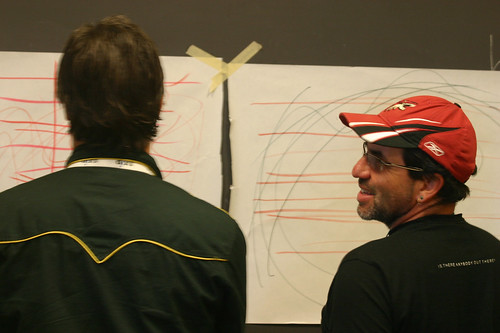 Then at 2 I hosted a rapid 45 minute “Graphic recording 101” session where we jammed about 10 people on paper on the chalk board and another ten on tables to take a quick dive into the space between the pen, the paper and the wall. My SD card reader is fritzing, so I can’t upload the photos to
 ![Reblog this post [with Zemanta]](https://img.zemanta.com/reblog_e.png?x-id=b7afbdf0-9aab-48a7-ac49-f653ac347371)
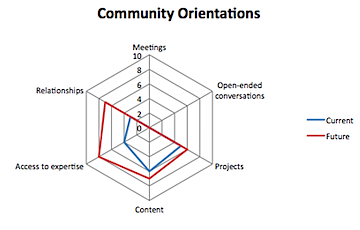 participants of the workshop to plot on a radar chart, which I’d drawn on a whiteboard, where they thought the community was currently and then do this again for where they would like to see the community of 12 months time. It generated a terrific conversation and a feel of mutual purpose. Here is what the result looked like.