My Harvest from a Half Day at Seattle #Kaizencamp

Thanks to a serendipitous conversation with friends im Benson (@ourfounder), Tonianne DeMaria Barry (@sprezzatura), I was able to pop in for 1/4 of the Seattle #KaizenCamp. If I were pitching a Hollywood script, I’d say “Open Space” meets “Lean Coffee” meets “Liberating Structures.” A group of smart, engaged people conversing about ways of working in a lovely place (The Foundry) with good food and coffee.

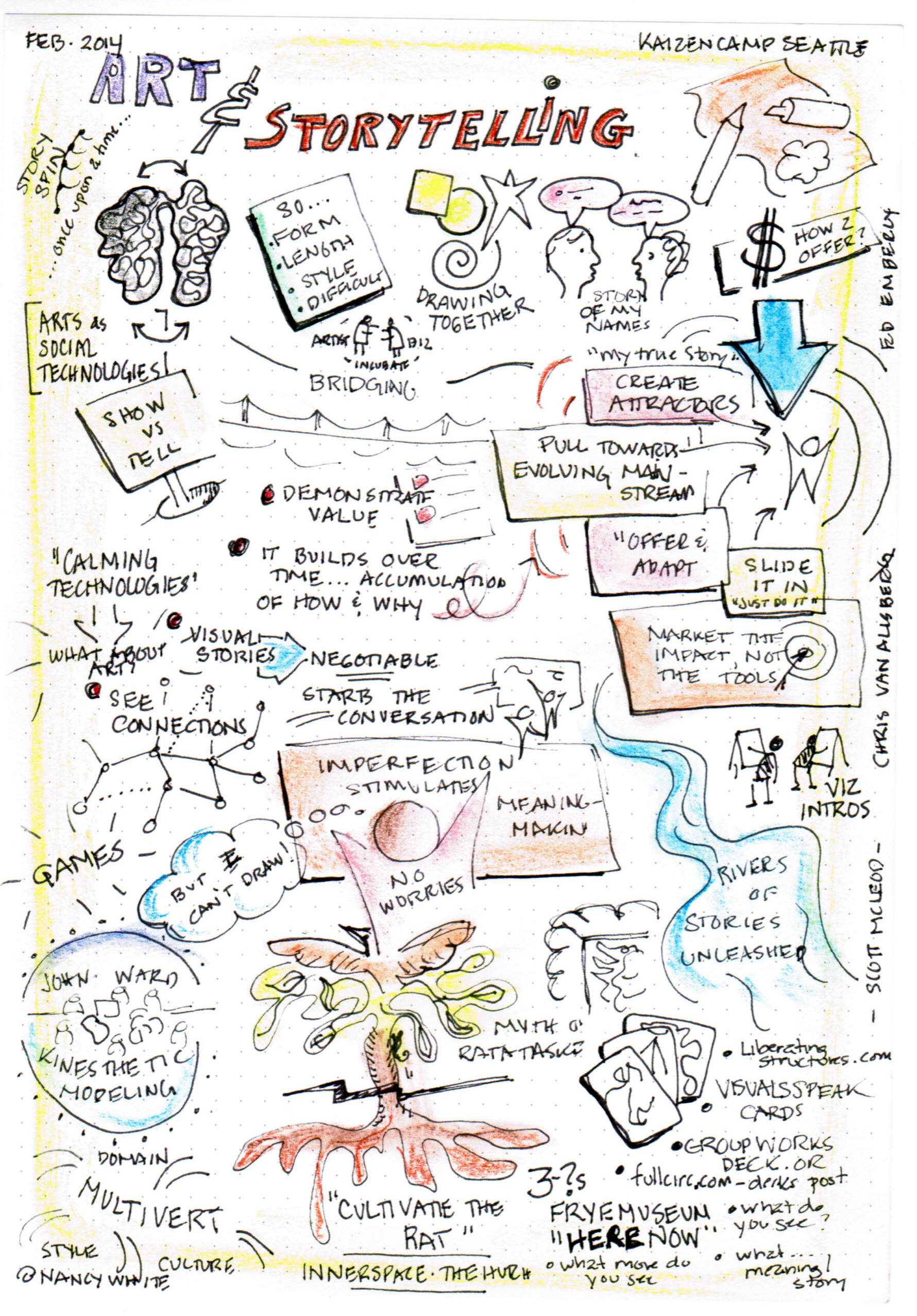
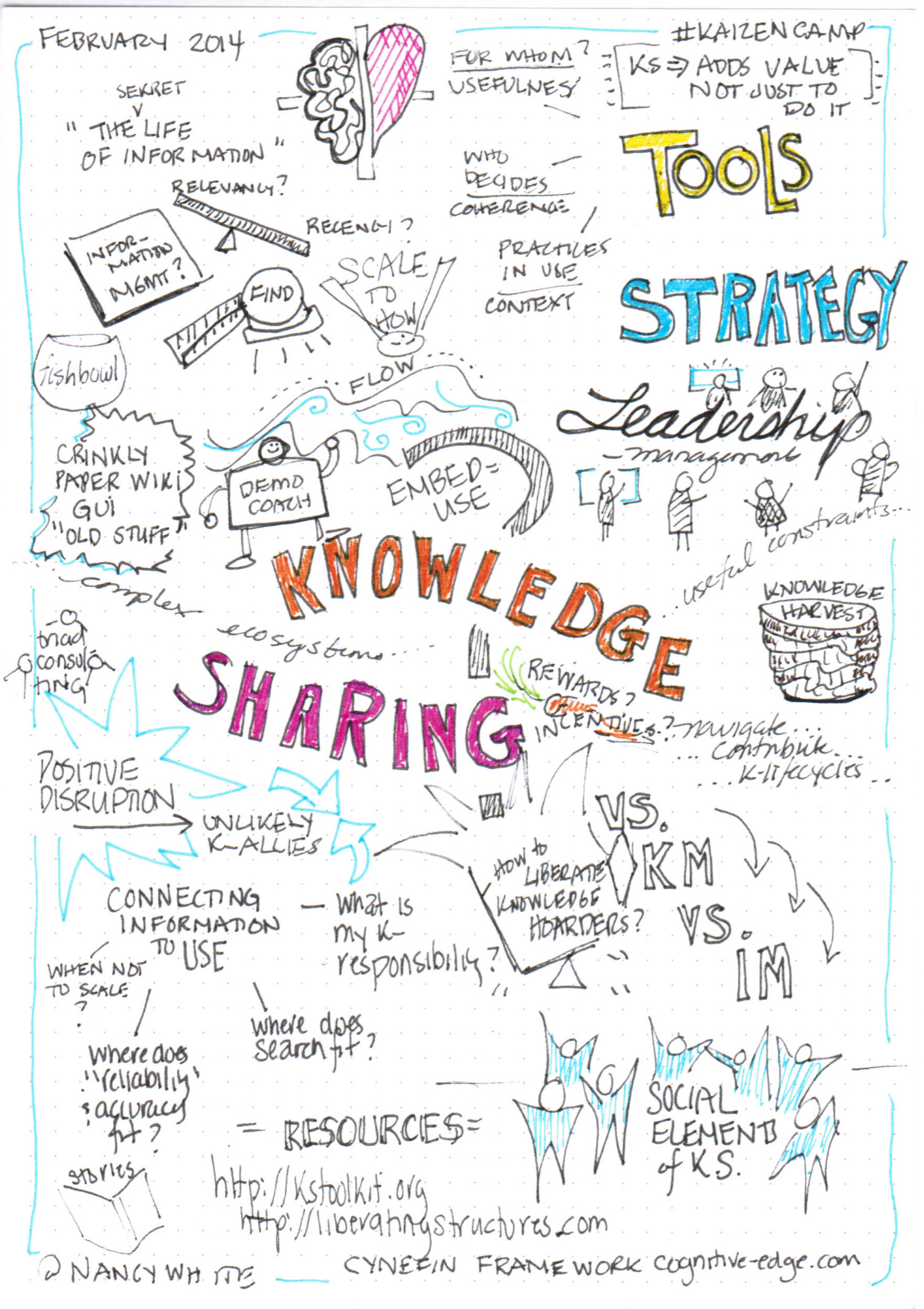
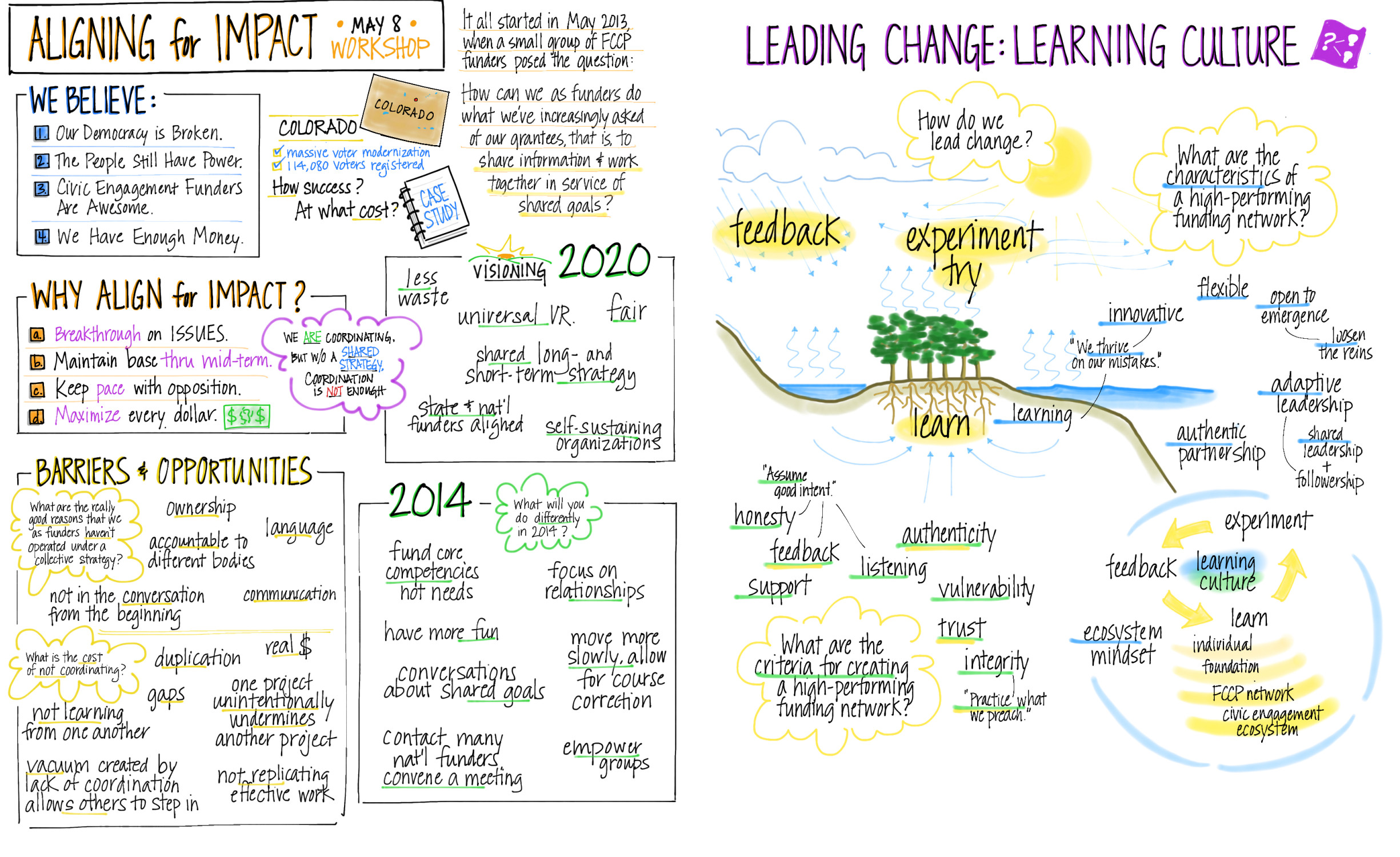
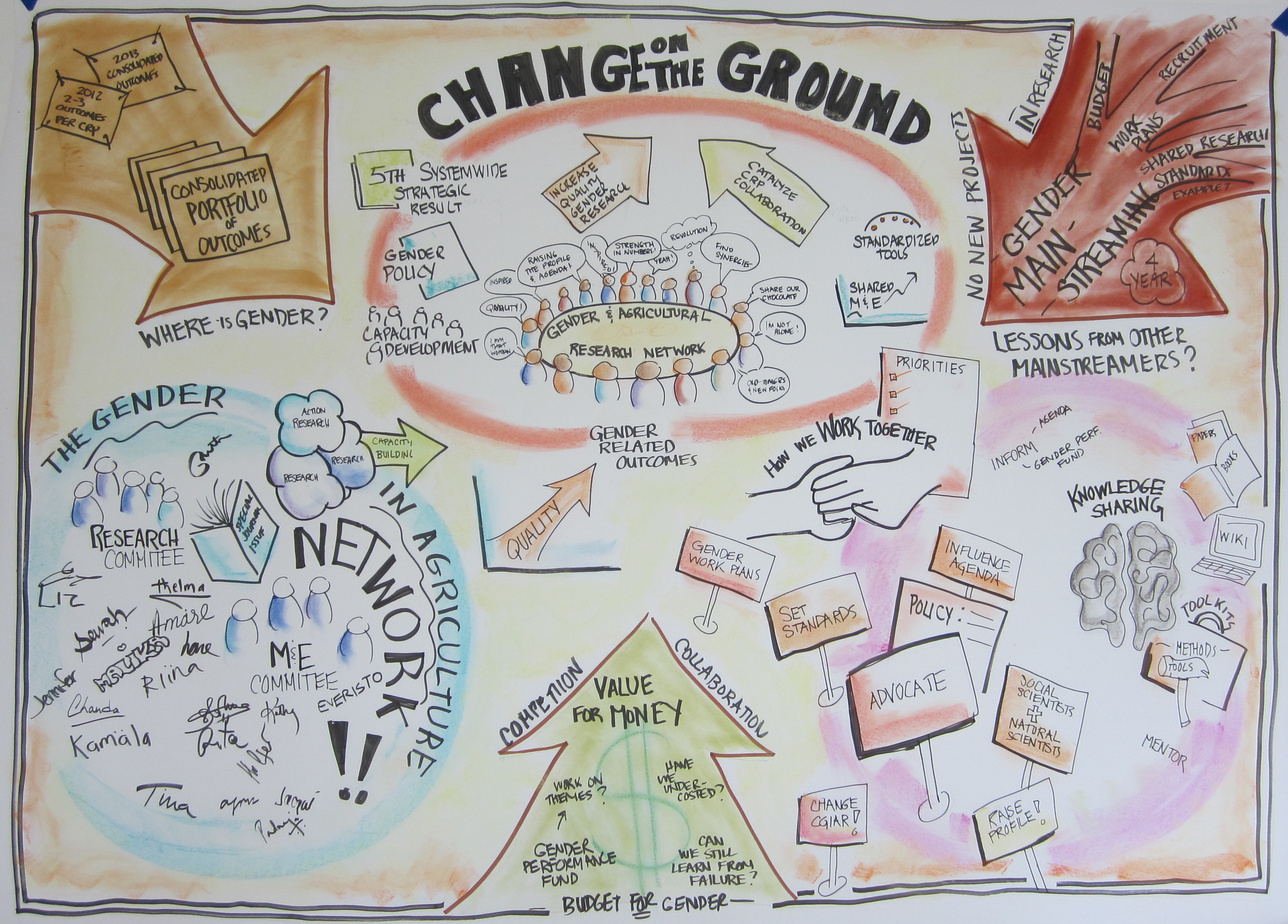
I sat at two rounds of “lean coffee,” one about Storytelling and the Arts, and one about Knowledge Sharing. I made a couple of sketch notes and captured some of the resources and I wanted to get them up and out, tagged and tweeted, before I rushed on to the next thing. (Rushing— sucks!) So here we go…

Storytelling and the Arts

KaizenCampArtStorytelling


URLs/Resources Shared:


Knowledge Sharing

KaizenCampKnowledgeSharing


URLs/Resources:


Updating My List of Facilitation Card Decks

Back in 2012 I posted about different card decks I’ve seen and used while facilitating (mostly face to face.) It turned out to be a popular post, so when I see new decks (like with then FABULOUS Groupworks Deck came out) I blog about them. Today one of the folks from the Open Innovators group  at the Hague University (where I have fun facilitating in the autumn) posted about a deck I hadn’t seen on facilitating behavior change and I thought I’d add this one to the evolving list. (Update: Here is another great list.)

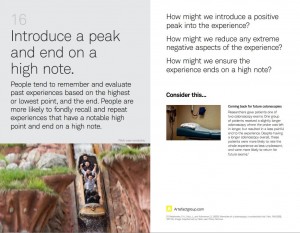
The behavior change cards come from the Artefact Group. (Hey, they are in Seattle!) Here is their blurb:
artefactcardsample

This set of 23 cards was crafted to help designers, researchers, and anyone facing a behavior change challenge, think through strategies to nudge people toward positive behavioral outcomes. They work particularly well when you have in mind a specific behavior that you want to change (e.g., “We want to get more people to ride the bus,” or, “We want people to stop smoking”). We focused on making these strategies easy to grasp, incorporate, and act on.

The set is divided into five thematic sections, each featuring strategies and examples that will help you understand whythe strategies are effective, and prompt you to think through how they might be used.

  1. Make it personal: The persuasive power of “me” and “my” (cards 1– 6)
  2. Tip the scales: How perceptions of losses and gains influence our choices (cards 7– 13)
  3. Craft the journey: Why the entire experience matters (cards 14 – 17)
  4. Set up the options: Setting the stage for the desired decision (cards 18 – 21)
  5. Keep it simple: Avoiding undesirable outcomes (cards 22 – 23)

These cards should be considered a starting point, to help you think through strategies and brainstorm new ideas you may not have previously considered. Keep in mind that any given strategy, on its own, is unlikely to be a silver bullet. And while some of these strategies may work in the short term, they don’t necessarily guarantee long-term success. At the end of the day, the only way to make sure that what you’re designing has the outcome you desire is to test it with real people.

From a quick glance the cards have a product design perspective, which makes sense as the Artefact Group works in design. I scrolled through them to consider how they might work  the international development contexts I often find myself. The images feel pretty North American to me, and reflect a strong consumer culture. I could see using the cards in the US even outside of commercial product design because the examples are familiar and would offer good thinking triggers. In international development the consumer emphasis and images would not translate well.  The tips and ideas are  useful and I think they would resonate in other cultures with appropriate  reframing for different contexts. 

A little side note: As an American, I have to be particularly sensitive as people often default to a “disregard that – just another American thing” when I bring them, even if the thing I bring is NOT American. Our cultural identities and our perceptions are strong! My behavior is deeply connected to my roots, so the act of carrying ideas across boundaries is essential to my work, but it has to be done with quite a bit of care. And I still mess up!

This is one of the really tough things with any of these decks is how to make them useful across domains and cultures. Wouldn’t it be nice to be able to take a deck and remix the images? Tweak the text and create a remixed deck altogether? Someone clever could program that, I’m sure.

In the meantime, the resonance of all the decks I’ve tried is the mix of the visual with the images, the tactile experience of the cards (moving them around, sharing them in a group setting, etc.) and the triggers that both the images and the words offer us to step, at least slightly, out of our practiced thinking and behaving pathways. (Yeah, ruts!)

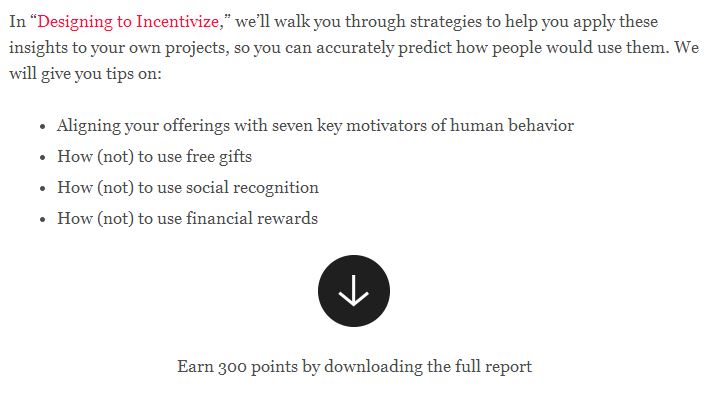
While you are on the Artefact Group’s site, check out their larger set of resources.  I was drawn a couple of other toolkit elements with a strong visual focus. Check out Designing for Empathy  and their relationship map (see also their whitepaper which is actually YELLOW!) . I have also downloaded “Designing to Incentivize” but haven’t read it yet. (And yes, I still dislike the word “incentivize” but I’m very interested in when incentives help and when they screw things up!) Clearly these folks have a good sense of humor. Here is a screen shot of the page with the summary of the incentives piece:incentivize
 

From Faster than 20: Civic Engagement Funders Aligning for Impact

I’m running like a maniac today, but this post from Eugene Eric Kim is to spot on to pass by. My highlights are the attention to online meeting design, shared visuals and slowing down to really notice what is going on. I hope that makes you want to click in and read. Image from the blog post by Amy Wu. Click to see the whole thing!

Civic Engagement Funders Aligning for Impact

Civic Engagement Funders Aligning for Impact.

Liberating Structures for Knowledge Sharing

Last Friday I was lucky to be the Mid Atlantic Facilitator’s Network February speaker. Of course, instead of talking about something I was totally comfortable with, I decided to explore the application of Liberating Structures to knowledge sharing, AND to explore the use of the structures in an online “webinar” environment. Nothing like jumping off the bridge. But the water was wonderful. I owe a lot to the hosting team (thanks Dana and Fran), the daring participants who were willing to push their use of Adobe Connect a bit further than normal, and the support of the wider LS community of users.

Here are the cleaned up slides. I included cleaned up versions of the chat transcripts in the respective “harvest” slides (which started out blank).

We are building a nice bunch of people who want to experiment more with Liberating Structures online. If you are interested, check out our LinkedIn group and join us!

via Liberating Structures for Knowledge Sharing.

Groups are smarter with women (no duh!)

FinalMeetingImageGender keeps coming up in my work a lot lately, both as a theme for meetings and work, but also in my lived experience. I have a colleague who has taken over one of my clients because we both feel the client will take on the coaching and feedback better from another man than from me. In a conversation about social capital related investments, another colleague says his rule of thumb is to ad 10% to women they are investing in over the equal-on-paper men just because he knows it pays off. Women’s role in agriculture is finally being recognized in the international development world. And in many cases, it is the development of good data to support these hunches that is finally helping us get traction in USING what we know about gender. So this article comes as no surprise. Don’t stop at the first quote… read to the second one!

“If you want to create a team that works intelligently, put more women on it than men. According to studies conducted by , Professor of Management at the MIT Sloan School of Management the founding director of the MIT Center for Collective Intelligence…“More women was correlated with more intelligence,” he says.”

Here are the three factors that emerged from the research:

  • The average social perceptiveness of the group members.
  • The degree to which members participated equally in the discussion.
  • The percentage of women in the group was a predictor of the group’s intelligence.

OK, so now everyone jumps up and down and says, yeah, but this is different online when there is more ease of contribution and no need for eye contact. Yeah. Right.

“Interestingly, the findings hold up in electronic collaboration among a group as well as they do in verbal collaboration. In some tests, the groups came together online and could only communicate by text chat. “It turned out that the average social perceptiveness of group members was equally applied, even when they can’t see each other’s eyes at all,” Malone says. He believes this means that a high score in the ‘reading the mind in the eyes’ test must be correlated with broader range of social skills and social intelligence.”

Online facilitators, TAKE NOTE!
via Groups are smarter with women, MIT research shows | Profit Minded – Yahoo Small Business Advisor.