Heading Back Down Under: Part 1 Australia

In late March through mid-April I’m heading to New Zealand and Australia to learn, lead and co-lead workshops and generally CONNECT. The Australian batch comprises at least two different things. Here is the first, which I’m doing with the fabulous Matt Moore.

Here is the description and information:

Sydney, Brisbane and Melbourne Workshops

Five years ago, the job title “online community manager” was rare. It was an addition to someone’s existing job, or they simply volunteered. Today, every organisation has or wants an online community (whatever that means). We are working both with bounded communities and broad, diverse networks. We need to be more deliberate in how we integrate community strategies into the heart of our organizations, how they impact our real work, and how they shape our organizations.

Smart organizations are asking:

  • What new strategies are emerging for the use of communities and networks?
  • What are the emerging practices of community & network management?
  • How do we work with both externally and internally facing communities?

Join us as we take a practical and forward looking examination of community & network practices. This in-depth, one-day workshop is aimed at practising online community managers and will tackle issues such as:

Upfront and personal. Social media offers new opportunities to work with customers, citizens and other external stakeholders. With social media employees can collaborate with each other in new ways. How does employee work flow change with greater external stakeholder contact? What does this mean for geographically distributed virtual partnerships? How do we avoid creating more work for ourselves than we can handle?

Multi-membership and it’s evil twin, platform proliferation. The heaven and hell of our context today is that anyone can create a space for a community or network, and technologists are inventing new ways to support these groups every day. We have more opportunities than people have time, attention and capacity to engage in. What does this mean for organizations’ online strategies? For the people stewarding both technology and process? How do we balance the needs of our community members for both variety, usefulness and consistency in this complex environment? And to repeat an important question, how do we avoid creating more work for ourselves than we can handle?

Format

Our format will be deep engagement with no more than 25 participants. We’ll offer some pre-reading prior to the workshop, then dig in with a blend of presentation, demonstration and practice. Our goal is to attract the smartest and most engaged community managers and online thinkers, so significant time will be allowed for participants to learn from each other and co-create solutions. Your output for the day will be a set of strategic questions to take back to your organization for planning your online engagement trajectory, ideas or “sketches” of potential experiments or actions, and a deeper connection with other practitioners.

Bring your mobile or smart device (or borrow one!) — “social sharing” is encouraged. Tweet, blog, Flickr etc. We do ask that everyone be explicit if they say something they do not want made public.

Coffee, lunch and snacks (including chocolate) will be provided. An optional, no-host drinks and social dinner will follow to support continued conversation. We encourage you to join us for the evening’s informal part of the day. We all know that’s where the really interesting conversations emerge!

Who Should Attend

Practicing online community managers, facilitators or similar functions. Technology stewards who provision and support technology for communities or networks. Organizational leaders with responsibility for online interaction goals or processes. While this is not an introduction to online communities or online community management, motivated and interested participants with less experience are welcome if they come in the spirit of a deep dive!

Your Workshop Hosts

Nancy White is an internationally recognised online facilitation expert-practitioner. She has worked with organisations as such as: The United Nations; Australian Flexible Learning Network; Boeing; the Consultative Group on International Agricultural Research; IBM; and the World Bank. She is co-author of Digital Habitats with Etienne Wenger and John D. Smith. Nancy blogs at http://fullcirc.com/wp/ as well as teaches, presents and writes on online facilitation and interaction, social architecture and social media . Nancy confesses to online interaction, learning and chocolate addictions.

Read about Nancy’s 2009 Australia visit.

Matt Moore has worked developing face-to-face and virtual communities with organisations such as IBM, Oracle and the Australian Securities and Investments Commission. He is currently a director of Innotecture and occasionally teaches at University of Technology Sydney.

Costs and Registration

All the workshops will be held in locations that are easily accessible from the CBD of each city. Each workshop costs $500+GST per participant. Please use PayPal to book with Visa/MC or contact us for alternative payment options.

Sydney (Monday 4 April 2011): Book now
Brisbane (Wednesday 6 April 2011): Book now
Melbourne (Monday 11 April 2011): Book now

If you pay and then subsequently cannot attend, we cannot provide you with a refund but an alternative participant from your organisation can be nominated.

Inertia, Introductions, Chicken Poop and DS106

Jim Groom has launched an open learning experience (pick your jargony name as appropriate) on digital storytelling this week and I really want to play. The first suggested assignement is creating and posting a short intro video. Argh,  I really don’t have time. I am really procrastinating, giving into the inertia of “well, if I don’t do it well enough, I won’t do it at all.”

To whinge a bit more, the fact is, the video is just a bit of the assignment. I’m supposed to fiddle and fidget with my blog infrastructure. Been there, done that and no, I don’t want my Twitter feed on the blog. Enough echoes, eh? I guess I’ll just have to find my appropriate level of resistance and rebellion, which is naturally triggered by Jim, um, ah, um, The Reverend and Performance Artist of the World (or something like that!) 🙂

Balderdash.

After seeing Brian Lamb’s, I felt fearless. For at least four clucking minutes.

This is the assignment:

By way of introduction tell us all a story about something that happened to you recently. It can be video, audio images, good old text, or any other tool you like. If you like restrictions, try and tell it quick (no more than 30 seconds in terms of audio or video—-extrapolate out from there for the other media).

via DS106 week 1: Introductions, webhosts, and a domain of your own « bavatuesdays.

There is a ton of material on the net about my digital life. So I picked something very local, very physical. So here is my intro video – giving a slice of my geo-life that most people don’t see. And of course, I failed the 30 second challenge. Lazy? Ya, you betcha.

Monday Video by RoCo Ilizaliturri: Sé Feliz!

RöCô Ilizaliturri has posted a simple, visually intelligent and sweet video on Facebook. I was totally captivated. Maybe it is the frame of mind I’m in, but the juxtaposition of images, music and text (in this case in Spanish, which causes me to pay attention differently) just caught me.

It doesn’t appear to be embeddable, so you’ll have to wander over to Facebook to see it.

RöCô Ilizaliturri: Sé Feliz!

Graphic Facilitation Jam July 2011

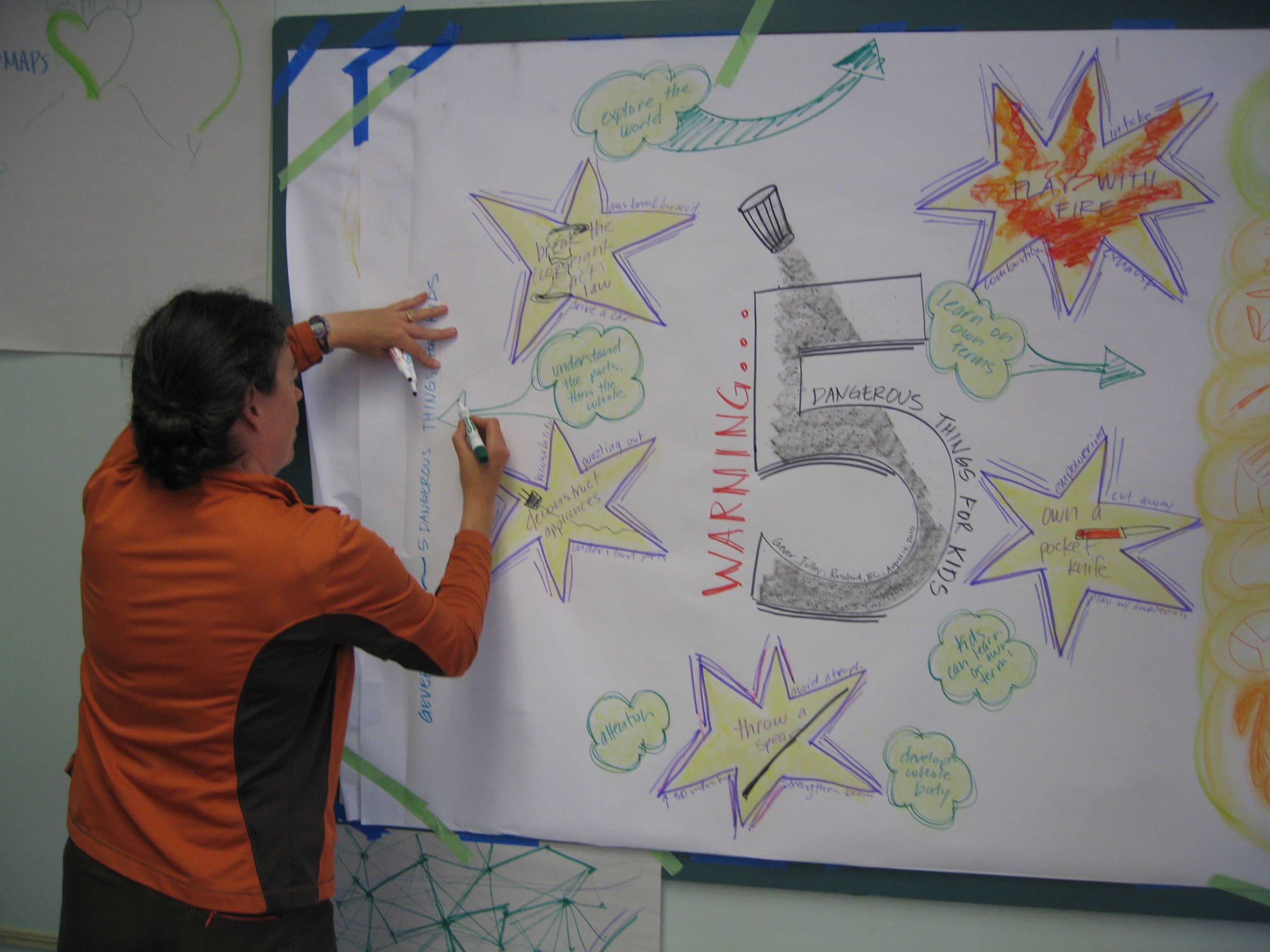
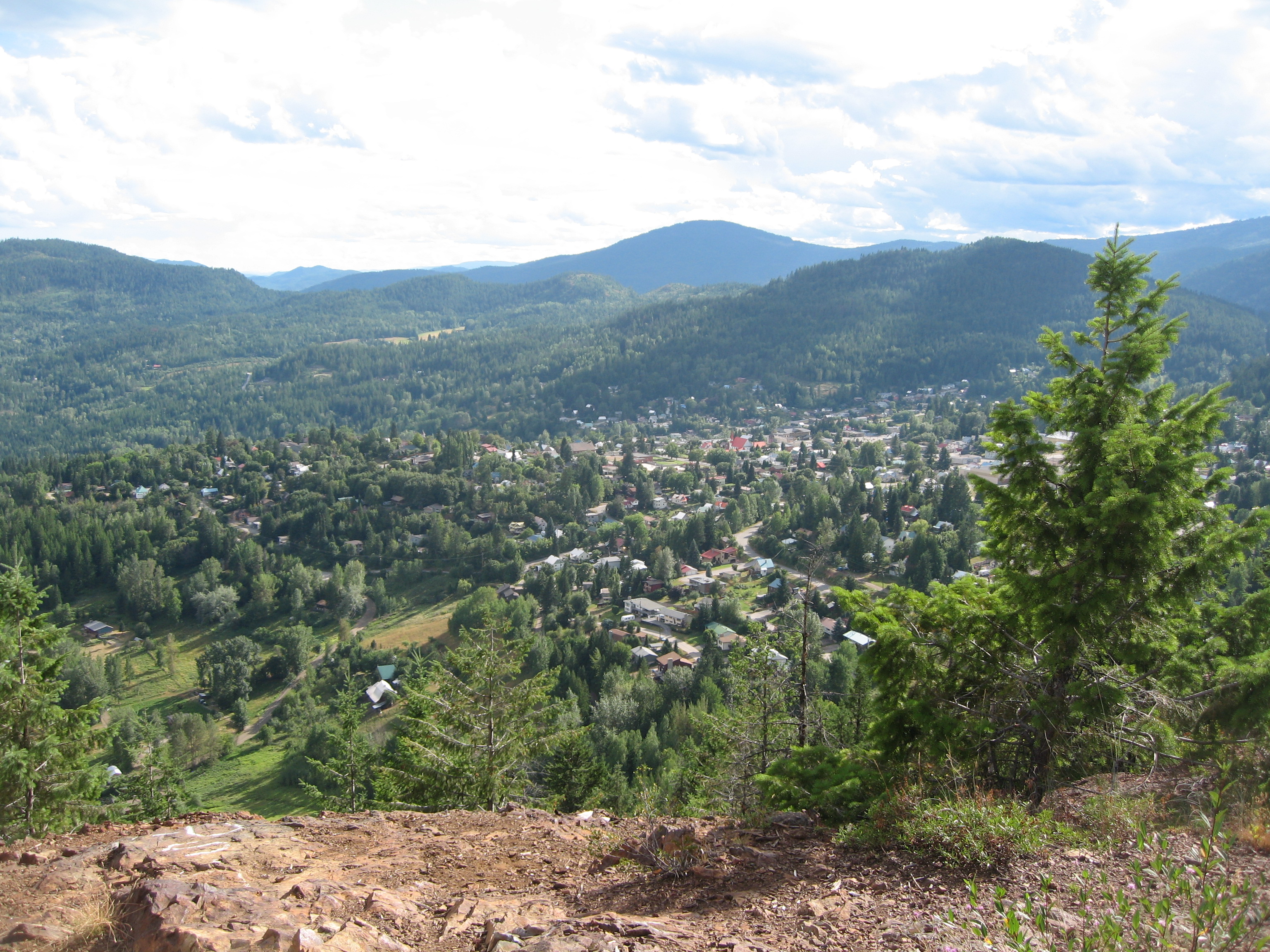
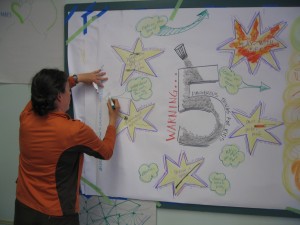
I’m very excited to co-host a visual practice learning event this year with my energetic and creative co-conspirator, Michelle Laurie. (Graphic Facilitation Jam 2011) We had a great time with the first version in August of 2010 in BEAUTIFUL Rossland, BC. Any excuse to plan another vacation there sounded good to me. The first round taught me a lot. If you aren’t from the area, you can fly into Spokane, Washington and drive up.

Graphic Facilitation Jam 2011: Using Visuals for Effective Engagement

2011 Date and Time: July 13 (5-9pm), July 14 (9-4pm) and July 15th (9-4pm)
Location: Prestige Mountain Resort, in beautiful, Rossland, BC, Canada

This experiential jam takes place almost entirely at the drawing surface. We’ll start the evening of July 13th by warming up our drawing muscles and silencing those pesky inner censors. The second day, we’ll build into the basic practices of graphic facilitation and recording. We will pay attention to preparation, the actual visual work, and follow up including digital capture of paper based images. Our third day will be devoted to participatory graphic approaches, practicing and giving peer feedback. Build your repertoire of icons, ideas and approaches which you can use immediately, as well as ideas about how to hone your practice.

When might we use this practice?
Sometimes our imaginations are sparked by a visual where words fail us. Think about when communities plan and imagine their futures, when teams consider the possible outcomes for their projects, when groups create maps to track their progress.  These are all opportunities to use visuals to engage and deepen community dialogue. You can use visual thinking to improve teamwork, communications, meetings, build engagement and to plan work. Step out of the PowerPoint rut!

Who should attend?
Playful people! Newbies and experienced! Facilitators, project managers, team leaders and members, town planners, teachers and anyone who would like to engage others beyond words. Please note: You do NOT need previous experience or have to consider yourself an artist. At some level, we can all draw and use visuals to enhance our communications and engage diverse audiences.

Detailed Agenda:
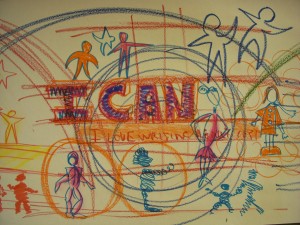
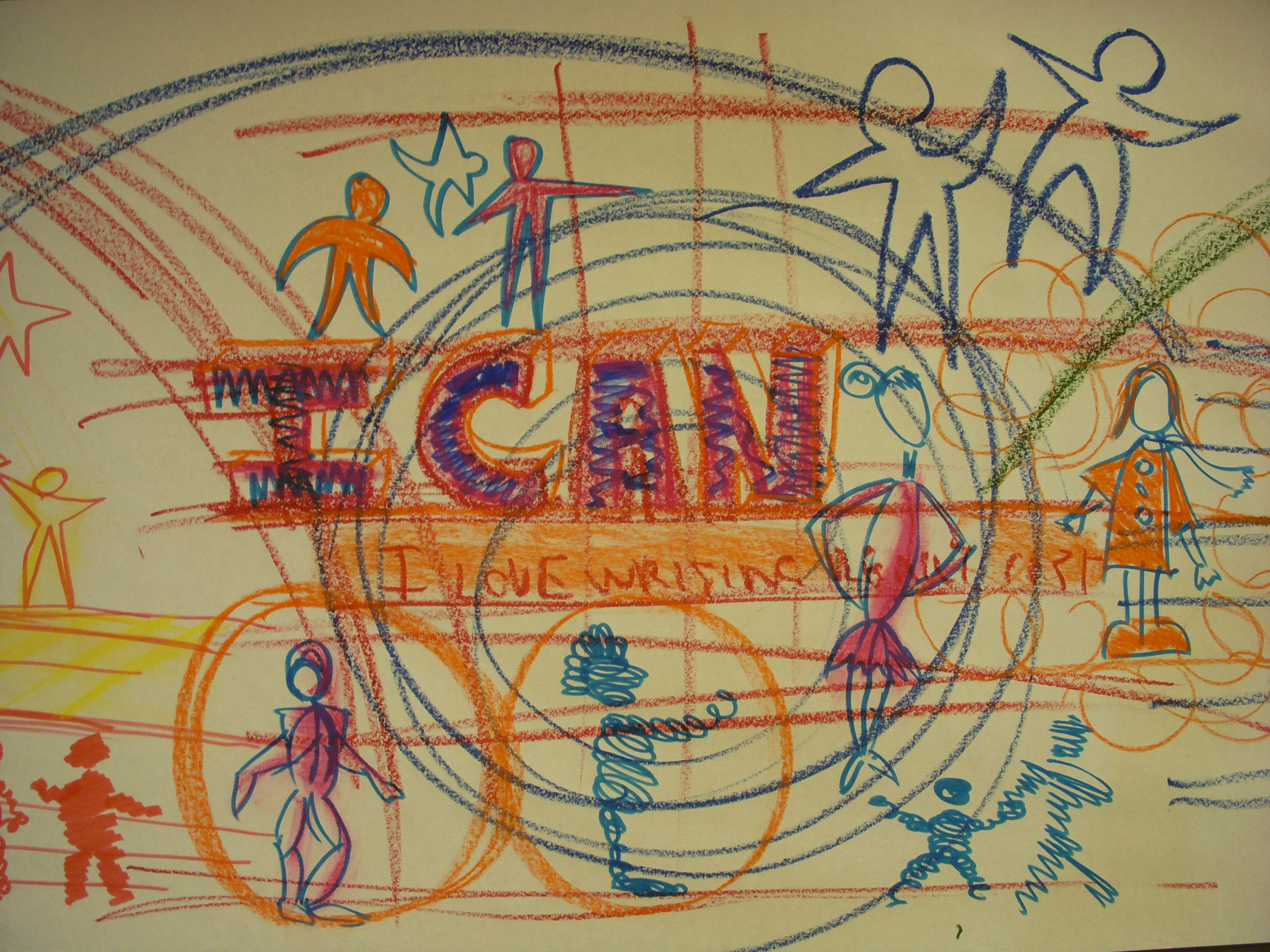
Part 1: I CAN DRAW – Hands-On Writing on Walls (July 13 evening, 6-9 pm including light snacks and beverages)
Description:
Tonight we’ll touch the paper, play with the pens and loosen up our drawing muscles. We’ll address the basics of “drawing  on walls” including starting shapes, lettering and some initial iconography. We’ll cover basic techniques and tricks that enable any of us to draw as a way of capturing and communicating ideas with each other. We’ll ask ourselves some questions, such as “What if you draw your notes instead of wrote them?” “Visually captured what is happening at a meeting or in a classroom?” “Engage people beyond words and text?” How would that change the experience for you and others?

When we get tired, we’ll spend some time looking at the work of diverse graphic facilitators, see how books can inspire us and play a bit with materials.  Dress for mess!

For a sense of a very short I CAN DRAW session, here is 6 minutes from a lightening fast 45 minute workshop at Northern Voice in 2009.
Part 2: Using Visuals With Group Processes & Facilitation Methods (July 14th morning)
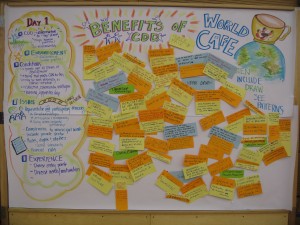
Description: In the morning we’ll explore  how visuals can enhance  group  processes such as planning, meeting and evaluation. We’ll do mind maps, mandalas and simple flip chart enhancements  that you can immediately use.  We’ll look at the use of visuals with some specific group facilitation methods such as World Cafe, Open Space, Appreciative Inquiry, and others. This part of the workshop includes lecture, conversation and lots of hands on experience. We’ll explore practical applications while we continue to learn to write on walls, the base elements of the practice of graphic recording and facilitation.

Part 3: More on Graphic Recording  (July 14 afternoon)
This afternoon we’ll focus on  traditional graphic recording (actively listening and capturing what is going on in a group, rather than using graphics as a facilitation device). We’ll review and practice  how to listen for key ideas, iconography, and organizing space. We’ll do a number of practice drawings then review our own work. We will hold several practice sessions in the safe space of the classroom.  This time will prepare you to record confidently in real work settings.
Part 4: Participatory Graphics and More Practice   (July 15)
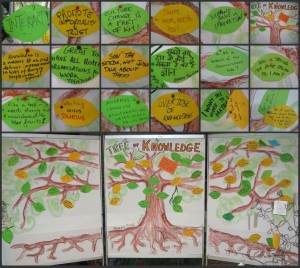
Building on our drawing and exploration of visual practices in whole group processes, we’ll experiment more with participatory graphics. This is when the pen goes into everyone’s hands, not just the graphic recorder’s. When people “make their mark” it changes their experience and ownership of the experience. It can open up how they talk and think about things.

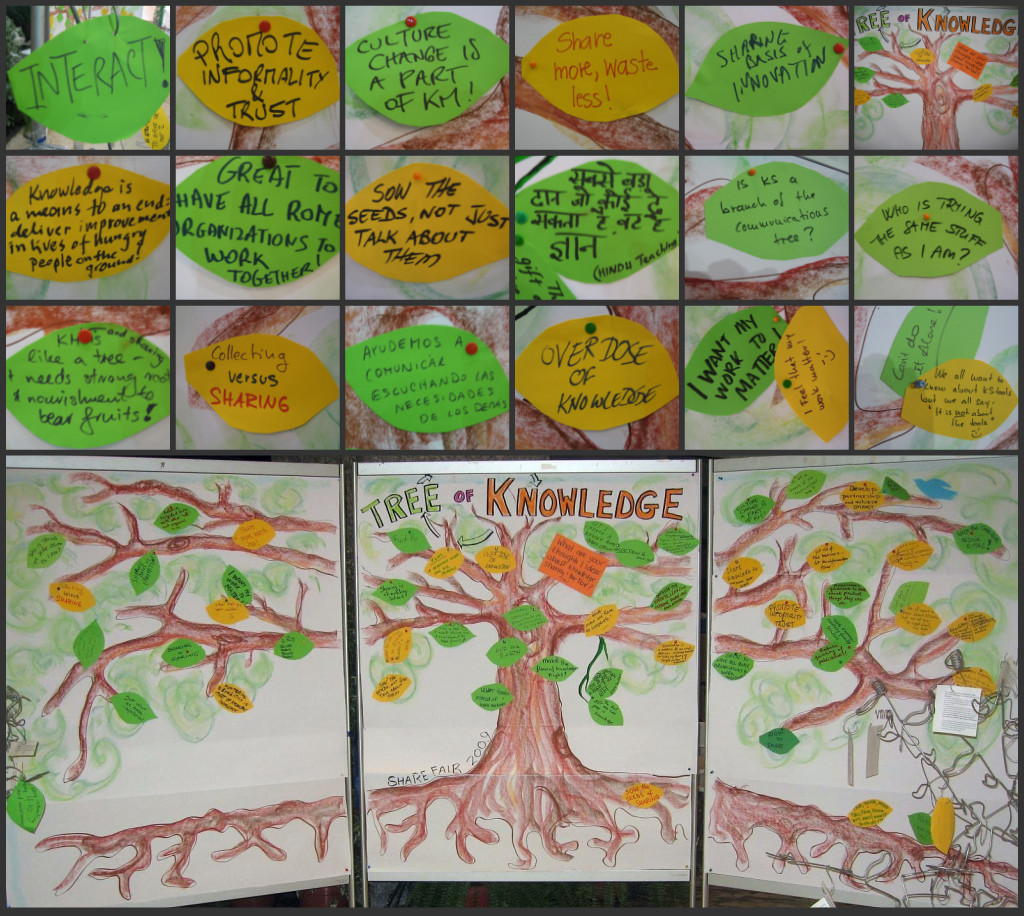
We’ll look at a range of participatory visual practices including methods such as visual icebreakers, “River of Life”, ” Knowledge Tree,” and other examples. Think about your group’s situations and needs and we can work to imagine practices that might help your real work!
We’ll intersperse our learning sessions with practice and feedback periods.  We’ll finish by looking at some of the resources available to visual practitioners!

Daily Graphic Jams!
From 4-5pm each day  we’ll offer an optional opportunity to practice visual thinking and drawing of key words and icons.

Preparation:

  • Come prepared to get your hands dirty.
  • Dress is comfortable clothes that can get dirty and you won’t be sad if they are stained.
  • Bring a pad of paper or journal to take notes – unlined is terrific.
  • Bring a digital camera to record the fruits of your labor.
  • We’ll bring paper, tape, some pens and chalk. Bring along your favorite supplies.
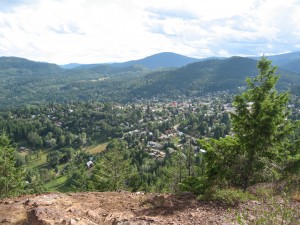
Location
The beautiful alpine city of Rossland, BC. Accommodation options have been suggested below.

Jam Hosts:
Nancy White is the workshop facilitator.  “I am a learner, mom, gramma and chocoholic. I founded Full Circle Associates to help organizations connect through online and offline strategies.  My practices are diverse, including online interaction designer, facilitator and coach for distributed communities of practice, online learning, distributed teams and online communities, doodler and visual practitioner. I have a special interest in the NGO/NPO sector and the emerging practice of using communities and networks for work and learning. I blog at http://fullcirc.com/wp/, teach, present and write on online facilitation and interaction, social architecture, social media and visual practices. I am co-author with Etienne Wenger and John Smith of Digital Habitats: stewarding technology for communities (http://www.technologyforcommunities.com).  Lately not only do I  like to draw on walls (graphic facilitation), but I spend a lot of time cooing over my new grandbaby!!! For more about my visual practice see http://fullcirc.com/wp/about/visual-and-graphic-work/.”

Michelle Laurie is hosting the workshop and is your key contact for more information. “As the workshop host, I draw on over ten years of experience helping local and international organizations and partnerships communicate as well as improve the way they create and share knowledge.   I have been successfully incorporating visual thinking into my work particularly with the use of participatory graphic exercises and visual aids.  My areas of expertise include sustainable development, collaboration and learning.”


Accommodation

There are several nice B&Bs in Rossland.

B&Bs

http://www.visitred.com/ private 2 bedroom suite and 1 single room, call Angela to discuss details, she always gives great service and great rates, 250 362 7790.

http://www.sweetdreamsheritageinn.com/rooms.html ($80/night ($85/double) with breakfast for workshop participants, Nancy says the breakfasts are AMAZING!)

Prestige Mountain Resort – www.prestigehotelsandresorts.com
We’re looking into a deal… stay tuned!

Food/Snacks/Lunch
There are several places in the workshop vicinity to eat a quick lunch.
Nancy promises to bring chocolate…

More info
For more information email Michelle Laurie michelle.k.laurie@gmail.com
Fish Bowling, Solo Galaxies and Free Writing in Holland

Note: I’m working a back log of “draft posts” that have yet to see the light of day. This is one from my trip to the Netherlands in December!)

Just a quick post from the Netherlands where I’ve been working with the fabulous Marc Coenders on an evaluation project for ICCO and it’s ComPart “project.” It has been lovely to work with the Compart team of Maarten Boers, Pier Adrea Pirani and Pete Cranston (the last two from Euforic Services and old KM4Dev pals.) It was a bit like “old home week” to use an American expression. The work has been fascinating, intense and challenging. The key word that keeps coming to me is fractal. Just when we get to one moment of understanding, things tilt just a bit and a new pattern slips in shifting things again. This is great for meaning making, not so great for finishing an evaluation report! 😉 It reminds us that we are working in a complex environment and if we are to succeed, we have to work with emergence. (See Peggy Holman’s terrific book, Engaging Emergence). We expect to be able to share the evaluation early in 2011 after the team has had time to absorb the findings!

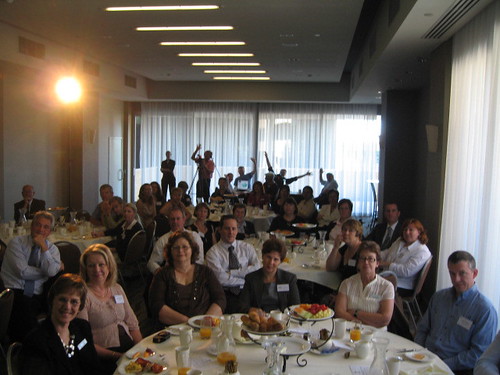
As a little “side benefit,” Maarten Boers of ICCO hosted a borrel, or gathering for the knowledge sharing/KM/social media types in the area at the end of the day, some from my dear old KM4Dev network. It had been a long and intense day of meetings, plus silly me managed to catch quite a bad cold, complete with fever, etc. So I was really pushing my physical limits.

We planned a Fish Bowl for the borrel focusing on the interplay between organiztional change and technology, springing off of the evaluation work at ICCO with their “ComPart way of working.” I was greatful to be able to mostly listen from the outside of the fish bowl and took copious notes, some of which I’ll put below.

But I have to say, there were a few funny, wonderful moments when we, most of whom were working both in a second language and from a very tired state, misheard things and we created something new (and funny) out of it.

  • What about “solo galaxies,” misheard from “solidarity.” Earlier in the day I was taking notes on the flip chart and I thought, hm, what a unique thing. Did that mean someone was really working in isolation, a “one star galaxy?”
  • We have the fish bowl method, but what comes to mind when you say “fish bowling?” Who is bowling? Are the fish the pins? My visual imagination went crazy.
  • Later during the conversation I brought up the concept of “free riding” in networks and communities and how do we distinguish this from legitimate peripheral participation. Some one wanted to know what writing had to do with it and wasn’t free writing good for getting past writer’s block?

I love this stuff.

Anyway, here are the notes — there are some terrific one-liners. I apologize for not catching who said what, nor for having a list of participants. Not such great network weaving on my part!

On December 9th a group of practitioners joined up at ICCO’s headquarters in Utrecht, the Netherlands for an informal borrel (drinks) and conversation about the interaction between organizational change and technology. We used a “Samoan circle” variation of the fishbowl process, starting with ICCO’s ComPart team (originators of a new way of working and a wiki-centric platform of tools) sitting with evaluator and learning consultant, Marc Coenders. As the other evaluator, I (Nancy White) started on the outside and took very random notes… these are far from complete or fully accurate, but reflect the things that caught my interest. And of course the notes reflect nothing I said when I stepped into the fish bowl. Heh!

  • Disruption <–> Opportunity
  • ComPart’s original motivation – learning networking, but that wasn’t actually where things went
  • Learning can bring discomfort (my question, do we make that discomfort visible and discussable?)
  • “It is good if you like a lovely, really rocky ride” Pete Cranston
  • Introducing a suite of web 2 tools is different than when we introduced email into our organizations. yet both changed our organizations.  With Compart and web2, tools are always/quickly evolving. Faster, more complex vortex of change as tools impact organizations and organizations shape tools.
  • Some teams took to the ComPart way – “just flew” – others did not (Why?)
  • Start with need or start with tool exposure and find needs? (or both?)
  • “No one is waiting for tools” and “everyone is waiting for a solution” and “if you don’t know what a wiki is and how to use it, you won’t ask for it.”
  • Finding the balance between the polarity of “demand” and “offer.”
  • The organizational level is too big and generalized to be the locus for focus. (Locus focus? Hocus pocas? Yes, I was tired.)
  • The beginning of ComPart showed possibilities more broadly. Now need to narrow.
  • What are the cost/benefits with respect to tool and process adoption?
  • People like to ask a colleague how to use a new tool.
  • Impact of new tools and processes spread beyond the actual users
    • what is the ‘ripple’ impact?
    • is this a form of ‘legitimate peripheral participation?’
    • is this a form of free riding? (Tragedy of the commons)
    • what does technological peripheral participation look like? Do for people?
    • is this related to the problem of “you do this for me” or “we do this for us”?
    • what is obligation of employer?
  • Point to ODI’s six functions of a network.
  • How do we take into account the expense/value of facilitation (budget)?
    • rhythm of pumping the “knowledge heart beat”
    • mandate (which people resist) and voluntary (which people deprioritise)
    • is “particpation” just more jargon these days?
  • To take seriously, and to seriously involve.
  • Mandatory stuff –> unconcious, power politics, fragmentation
  • Face the truth sooner when things are/aren’t working and respond versus sticking to your plan.
    • Do NGOs do this less often than businesses?
  • Go where there is interest.
  • Role of leadership – walk the talk, model collaboration. If leadership does not have comfort wading into new tools and practices, not likely organization will fully move tere.
  • Lack of clarity of what our “partners” really need or want, all the while we talk about putting them i the center.
    • In the ComPart learning history, it was noted that in the early days it was difficult to even get names of partners to contact.
    • Negotiating with internal/external boundaries is tricky
  • How do we relate internal learning networks to external related networks?
    • tap into existing communities before creating own
    • intrinsic value of both inside and outside communities, but caution of overload and overlap
  • Individuals often have their own “eccentric” routings to get to knowledge that are useful for them, but foreign to others and hard to share w/ others.
    • how they negotiate boundaries is also individual
  • What is the role here for network weaving?
  • “Empherality is ok”
  • personal and professional motivation
  • What if ICCO celebrated the learning that came from the “inssurection” of ComPart?
    • “inovation always starts bottom up” (the guy in the blue sweater)
    • sooner or later management gets involved for positive or negative reasons
    • that’s how organizations learn
  • How to recognize when we are “in over our heads” and not make wrong headed moves
  • Watch for experiments that are “too high risk”
  • “Most ICT programs fail due to lack of user participation and lack of WIFM (whats in it for me)/motivation