Hey Networks! Don't underestimate relationship

In strolling through the archives of unpublished blogs posts, I came upon one which was simply a link to a great blog post from the Interaction Institute in 2017. And boom, it is still resonant today.
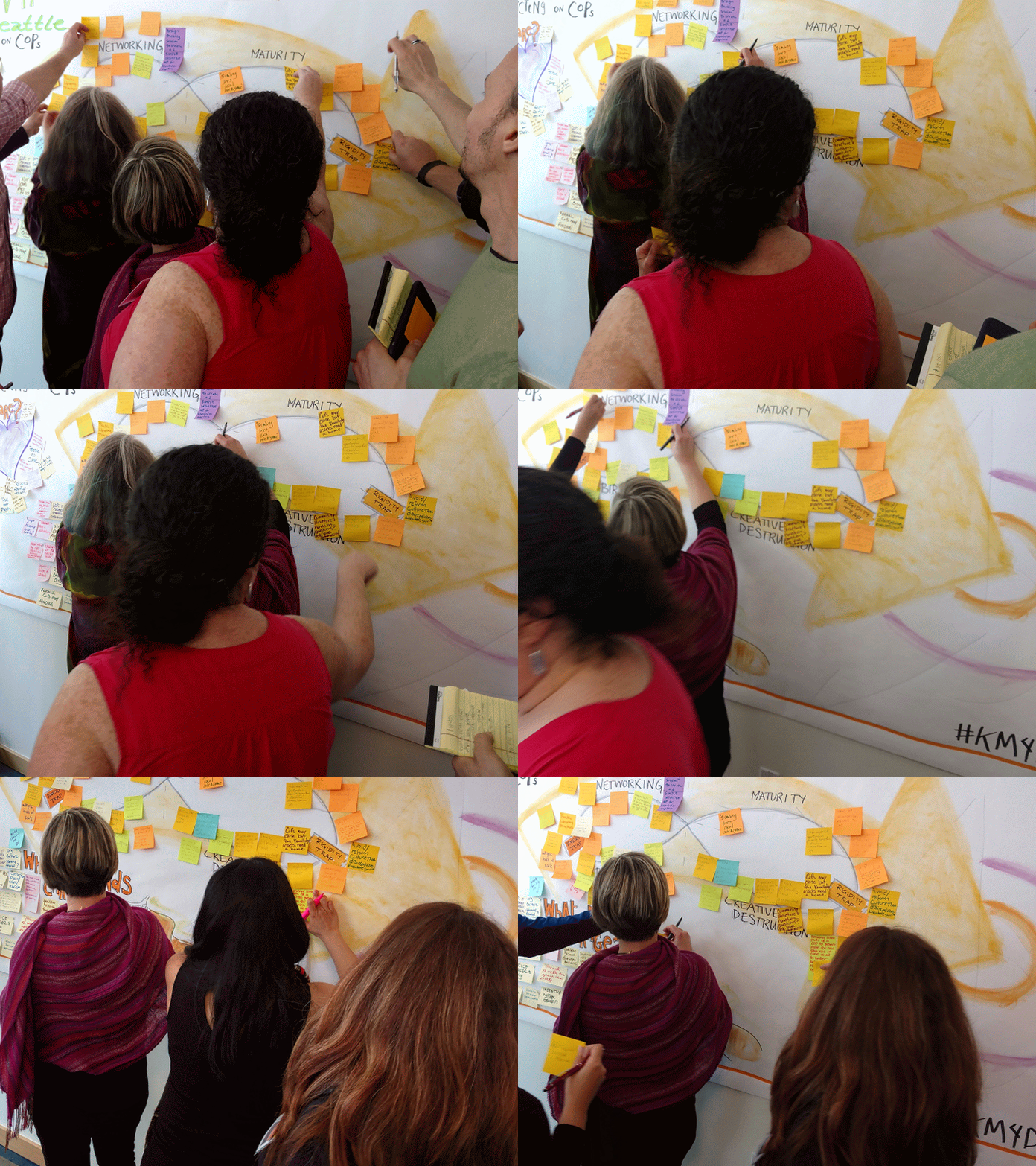
Network members making sense of their own data…

The wonderful author, Curtis Ogden, offered 10 principles for thinking like a network. I want to pull out a few things in each one to share with folks in some projects I’m working on. So why not share it here too? This is dynamically incomplete… be forewarned!

The groups I have been and am working with are quite different in some ways. One is an internal organization. Another is a tripartite collaboration that is ready to grow into a network. A third is a group that has done amazing F2F training and capacity building and has had to regroup in a COVID-Virtual world. All three, however, are motivated to act their way into their purposes in new ways. So first is the mindset and practices. In a later blog post I want to explore snap-back, the falling back into our old ways of being and doing.

Curtis’ intro to the article is great context:

Over the past several years of supporting networks for social change, we at IISC have been constantly evolving our understanding of what is new and different when we call something a network, as opposed to a coalition, collaborative or alliance. On the surface, much can look the same, and one might also say that coalitions, collaboratives and alliances are simply different forms of networks. While this is true, it is also the case that not every collaborative form maximizes network effects, including small world reach, rapid dissemination, adaptability, resilience and system change. In this regard, experience shows that a big difference maker is when participants in a network (or an organization, for that matter) embrace new ways of seeing, thinking, and doing. 

https://interactioninstitute.org/thinking-like-a-network-2-0/

I think we all confound different forms of collaboration, try to be all things to all people and then we are frustrated when our ambitions are cut short. Working in new ways requires two things: discernment about what is possible, and a repertoire to make the possible real. I think these principles from Curtis support both these things. I encourage you to read the original article, because below I’m short cutting into some specifics.

Adaptability instead of control

This shows up so strongly in “strategic planning.” We tend to equate a detailed, task descriptive plan as a proxy for strategic action, especially in grand funded projects where plans, and executing on the plans, are key points for accountability. Yet, most work these days is in complex and changing contexts. Can we shift to adaptive planning which defines the purpose, direction and then iterates forward with strong accountability during, not just at the end?

Contribution before credentials

Equity has been in so many conversations. What seems to constantly block equity and its precursor, access, is that we continue to worship at the alter of credentialed expertise, rather than tapping all kinds of expertise. Whoops, look at the word “tapping!” We have extractive approaches to knowledge generation. How do we move to more contribution versus extraction that honors all, regardless of the title certain parts of society wish to attach to some and not others?

Giving first, not taking

See above about extractive mindsets!

Resilience and redundancy instead of rock-stardom

See above regarding stepping away from single views of expertise for the rock stardom stuff, but the resilience and redundancy needs a post of its own. The practice-based approach I’ve been working on for this is that we backfill for each other across departments, organizations, networks. No one these days can afford to hire all the skills they need at any one time. Trading labor across our networks builds redundancy and a sense of mutual support. There is a limit to this — we can’t keep ADDING work without taking something away.

Diversity and divergence rather than the usual suspects and forced agreement

This is why we work in networks!

 Intricacy and flow not bottlenecks and hoarding

I struggled with this one until I went back and read Curtis’ words on this one. The word that emerges for me is abundance. (In all senses of the word, including mindset.)

I’m running out of steam, so I’ll leave the last four for YOU to flesh out, annotate, expound upon. If I leave this as a draft for another year… well, you know what happens!

Self-organization and emergence rather than permission and the pursuit of perfection

Shift focus from core to the periphery

From working in isolation to working with others and/or out loud

 From “Who’s the Leader?” to “We’re the Leaders!”

Artifacts from the KM4Dev Session on Peer Assistance

Note: My threat/promise to blog weekly has suffered a bit. I’ll try harder! What do you want me to blog about? Tell me in the comments.

A few weeks ago I wrote a provocation on Peer Assistance and Mutual Support in preparation for a KM4Dev Knowledge Cafe. I really enjoyed thinking more deeply about the power dynamics of peer assistance. Thanks to the great KM4Dev team here are the artifacts from the event. ‘

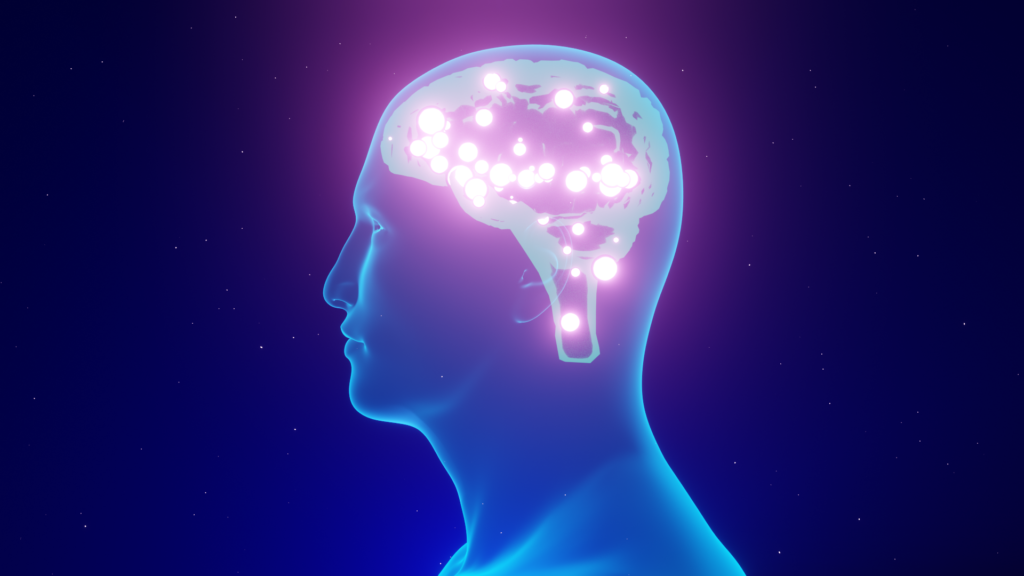
Sunday Share: Brain Images

A little rabbit-holing today. First stop was at Peter Kaminski’s Collective Sense Commons site and community, which led me to Jon Manning’s Creative Commons Galaxy Brain images, both in male and female representations. (I acknowledge that binary is insufficient, but we’ll leave that for later.)

Everyone talks about brain science these days. It is fun to see how folks visualize this. These images are cool to me, and YOU can use them too! Jon role models that what YOU made, YOU TOO can share!

Let’s share! From https://secretlab.institute/2021/02/15/cc-0-licensed-galaxy-brain-images/ CC-0 license

Jon’s Sources/Source Information:

These images are licensed under CC-0. They contain material from the following sources; if you’re using them in your own works, you’ll need to acknowledge the CC-BY elements:

Virtual Peer Assistance & Mutual Support (MOIP#11)

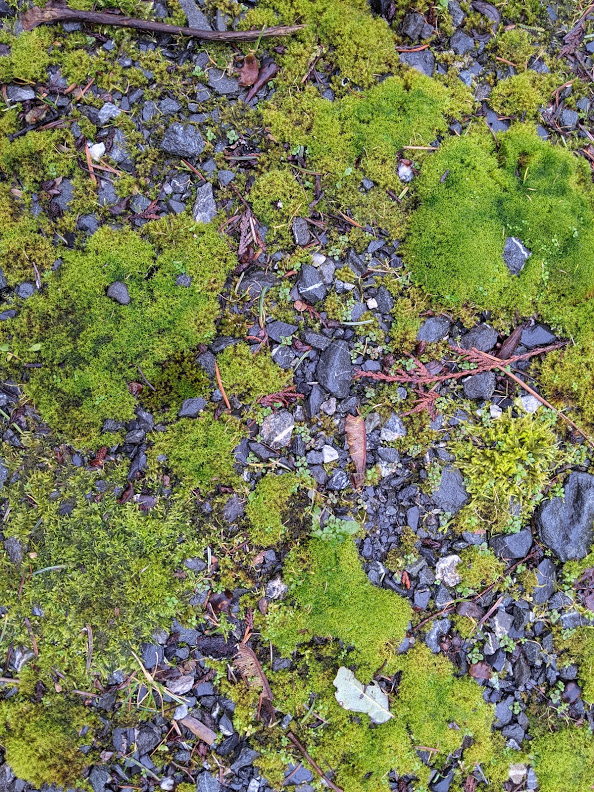
What we don’t see beneath the patchwork on the surface…

This is 11th in a series of posts about the tidal wave of moving online in Pandemic-Covid-19. #1#2#3 #4 #5 , #6, #7, #8, #9 and #10. This post explores peer assistance and mutual support practices, building on a blog post last Spring about virtual peer assists. This is also in preparation for a KM4Dev Knowledge Café on February 18th on this topic. (Please, join us! 7:00AM PST, 16:00 CET)

We Are Connected

My colleague and friend, Helen Gilman, pointed me to a tremendous book by Robert McFarlane, “Underland: A Deep Time Journey.” Among other fascinating topics, McFarlane writes about how trees “talk to” and support each other through underground fungal networks. (See Suzanne Simard’s Ted Talk.) This reminded me that we often operate as apparent autonomous workers in our jobs — single trees — yet in fact our networks sustain and support us. We are part of a bigger whole without which we could not exist. Like looking just above the forest floor and not below, we miss the practices that generatively connect us. Unseen, but present. With this blog post I want to “observe” some of those practices we call “peer assistance.”

Here is the baseline I offer. Our greatest knowledge resource is each other. The knowledge we each carry, the perspectives and experiences around our knowledge, and our diverse contexts, gives us an immense, and decentralized resource.

Assistance: With useful peer to peer (P2P) practices, knowledge can be more accessible, freed from centralized organizational boundaries and gatekeepers. P2P practices can subvert the power of large institutions that can dominate with or perpetuate one view of the world, one knowledge perspective. P2P approaches can step around those who wish to protect, prioritize, or hoard knowledge. They can help us be aware and address racism and colonialism that has been baked into so many of our “expert-centric” practices.

Support: At a human level, P2P practices can engage each of us. They can respect the fact that we all have useful knowledge. We might feel a bit more empowered and a bit less vulnerable working at the peer-to-peer level rather than trying to show up in front of a large organization. Feel a little more human. We, and our knowledge, might be unleashed in more generative ways.

I’m interested in these P2P knowledge liberation practices, and particularly these days, doing them online. This post explores a common form of P2P, peer assists, and how we might expand the repertoire beyond them, and to include support as well as assistance.

Peer Assistance (and support!)

A fungus growing in a rotten tree near my house…

Peer assistance is NOT new. In the knowledge management (KM) world, it has been popularized by the Peer Assist format. (Doing them online is also not new, but it matters now, more than ever, with the pandemic.) I like the definition from ODI building on Purcell and Collison’s work that describes a peer assist as a “learning before doing” activity.” Learning before doing, or the process of learning before undertaking a task, activity or project.” (Learning AFTERWARDS with peers could be exemplified by an After Action Review.)

A common format for peer assists is to have the assistee – the person who needs assistance — convene a gathering with people they invite who may have useful knowledge or expertise to address the assistee’s challenge or task. “You know more than I do, please help me!”

There is an explicit recognition in peer assists that knowledge is power. Knowing “the right thing” to do is a central component. And yet, our challenges are not always about not knowing what to do, but moving beyond feeling alone and vulnerable when risking doing what we perceive we should. Knowing WHAT to do is different than doing it. Knowing HOW do do something is different than doing it. Understanding the context for doing it. Having the mindset to do it. Confidence? Enough “safety” to take the risk? This is where mutual support comes in. Recognizing that we are humans working with this knowledge.

P2P may also help us with another huge challenge we face. Bias, or more accurately, biases! An “expert-driven” view of assistance may be implicitly propagating the bias of dominant actors or cultures. It could deprioritize or even bury local and indigenous knowledge. Could P2P approaches help us a) be aware and b) step out of these traps?

KM4Dev, one of my core communities of practice, has been engaged in ongoing conversations both about decolonisation of KM, and, as always, about specific KM practices. (See these posts from Bruce Boyes and Charles Dhewa.) For example (and forgive the broad generalization) when we look at the implicit prioritization of recognized expertise, we may be practicing racism and colonialism. When we look at centralized knowledge practices — same.

In the time of COVID-19, we have focused on ONLINE practices. Online theoretically gives us more access to a wider diversity of peers and allow easy self-organization, rather than relying on a centralized source. Peer to peer methods online provide scaffolding to connect with other peers to assist in a member’s or members’ challenges and opportunities, often in a “just in time” or very contextually embedded context. I sense that they also offer a specific assumption that we all have knowledge that may be useful to others, not just the validated and/or high status “experts!” 

Below are a few starting peer assistance and mutual support options, building on a blog post last Spring about virtual peer assists. We will build off of this at our KM4Dev Knowledge Café on February 18th on this topic. (Please, join us! 7:00AM PST, 16:00 CET)

P2P Assistance and Support Online Practice Options

One approach to peer to peer assistance recognizes we each bring something of value, even if we aren’t identified (self- or by others) as an expert in a particular area. An example of a process that recognizes this distributed resource is Troika Consulting as defined in the Liberating Structures repertoire. Three people “sit” together, taking turns sharing their challenge, problem or idea, and get feedback from two peers. It is amazing that each time people report they received insights, even with perfect strangers.

As I think about Troika compared to traditional peer assists, Troika actively promotes the idea that everyone has something of value, not just the experts. It is easy to do with just three people (or 3x X). During the process, ALL THREE people can gain insights from their peers, not just one peer assistee. There is the distribution of engagement and value creation, regardless of role.

Another Liberating Structure is Discovery and Action Dialog. DAD, as we know it, builds on the idea of positive deviance – how can one person or group succeed at what the rest of us struggle with? Exploring where there are seeds of innovation and possibility through simple guided conversations through a series of prompts, and new possibilities emerge.

There are other Liberating Structures that do this sort of unleash/engage that we might not always define as peer assistance and support, as noted in my previous blog post. You can go there for specific examples. Longstanding group process traditions such as Open Space, World Cafe and the Art of Hosting also rest on this foundation of the value of our peers.

Connect the Micorriza!

Many years back when I was deeply involved in communities of practice (CoP) work, there was this persistent observation that people drew more confidence and a sense of support from their peers in their CoP than from their supervisors and direct team members. Freed from the constraints of organizational hierarchy and politics, peer support felt more genuine. To unleash ourselves, do we need our peers? I experience this as essential.

To decolonize or remove racism from our work, do we need our peers? I don’t know about you, but I can’t even imagine doing the work without my peers, both in figuring out HOW to do it (peer assistance) and the confidence to DO the work (mutual support.)

Resources

Designing and Hosting Virtual Field Trips (MOIP #10)

Moving Online in Pandemic is now #MOIP! This is 10th in a series of posts about the tidal wave of moving online in the time of Covid-19. #1#2#3 #4 #5 , #6, #7, #8 and #9.

I’ve mentioned my work with the Floodplains by Design network over the past few years. We have been doing a lot of experimenting and practicing with online meetings and events over the last 11 months. We captured a few of our practices and now I’ve drafted an article on Virtual Field Trips. And yes, I’m looking for your review to help improve it. Right now it lives on a Google doc where you can comment. You are also welcome to comment generally here. Care to help? I’ll post the intro below. And THANKS!

1. Introduction

At the Floodplains by Design (FbD) Culture and Capacity Action Group (C&C) November 2020 meeting, we recently reviewed and reflected upon our experiences and value of field trips to FbD project sites. (See figure 1.) COVID-19 has curtailed our face to face field trips, demanding a new, virtual way of meeting these needs. 

With the C&C’s focus on building and supporting a learning network, we are interested in the overall set of learning and network weaving practices that can help spread and deepen IFM. This document offers insights and useful practices for designing and implementing virtual field trips (VTS) to support Integrated Floodplain Management (IFM). It also helps us share in general the value of, and practices around field trips which are useful in our work together whether we are F2F or together online. It builds on our first document on Virtual Peer Assists.

We hope that through these occasional articles/resource documents we can make our learning more widely available across the FbD network and beyond. 

The first section of this document  reflects more generally on the purpose and value created through field trips. The second section addresses specific practices for planning and executing virtual field trips. A resources section follows for additional information.

Figure 1: Harvest from the November 2020 brainstorm on VTS

We created this first draft of useful virtual field trip practices using four guiding questions. 

  1. What general immediate and longer term value is created through field trips in our integrated floodplain management (IFM) work? This establishes a shared baseline understanding of field trips in IFM. 
  2. What specific purpose(s) and value creation do field virtual trips serve in our work right now? With whom? Clear purpose drives how we design our VFTs.
  3. What useful field trip practices have we learned for VTFs?
  4. How might we know when we are making progress on this purpose? Like any practice, we assume that as we learn, we can improve our practice.

I’m happy to post more here if that is useful… and know the doc got pretty LONG!