Back when there was “social” in the software…

Picture of the head of a dog (Australian shepherd?) looking at you.
Alan Levine’s blog avatar

Alan Levine noted that he is just past his blogaversary and linked to a post of his from 2006 that I just love. It is a story of how he created an artifact from a presentation I gave at NorthernVoice (a BLOGGING conference, can you IMAGINE that?? We were crazy kids back in the day!). What was magical about this story is how Alan’s recording of my talk rippled across our respective networks and how people added to it and amplified it. (Bev, I loved your notes. Still do! Nick, all these years you mashed it up and now retirement is on the horizon! Who would have guessed!) I think this is when I really became a fan of CogDog, aka, Alan.

A picture of a woman in 2006 with shoulder length curly born hair glasses, holding two bags of Dove Dark chocolates. Photo by Alan Levine.
Photo by Alan Levine of a much younger, shaggier me, sharing chocolate

Alan’s post also has me looking back at years and years of Flickr event albums. Mama mia, there are stories. I often think I have few stories to tell. My problem is simply that I just don’t practice telling them! A little nostalgia… And boy, I was a lot younger back then! And with a lot longer hair. Still sharing the same Dove Dark chocolates though!

Edit a few minutes later: I’m listening to the audio. Still relevant.
From the Archives: Alone, Together, Silent, Vocal, Collaborative

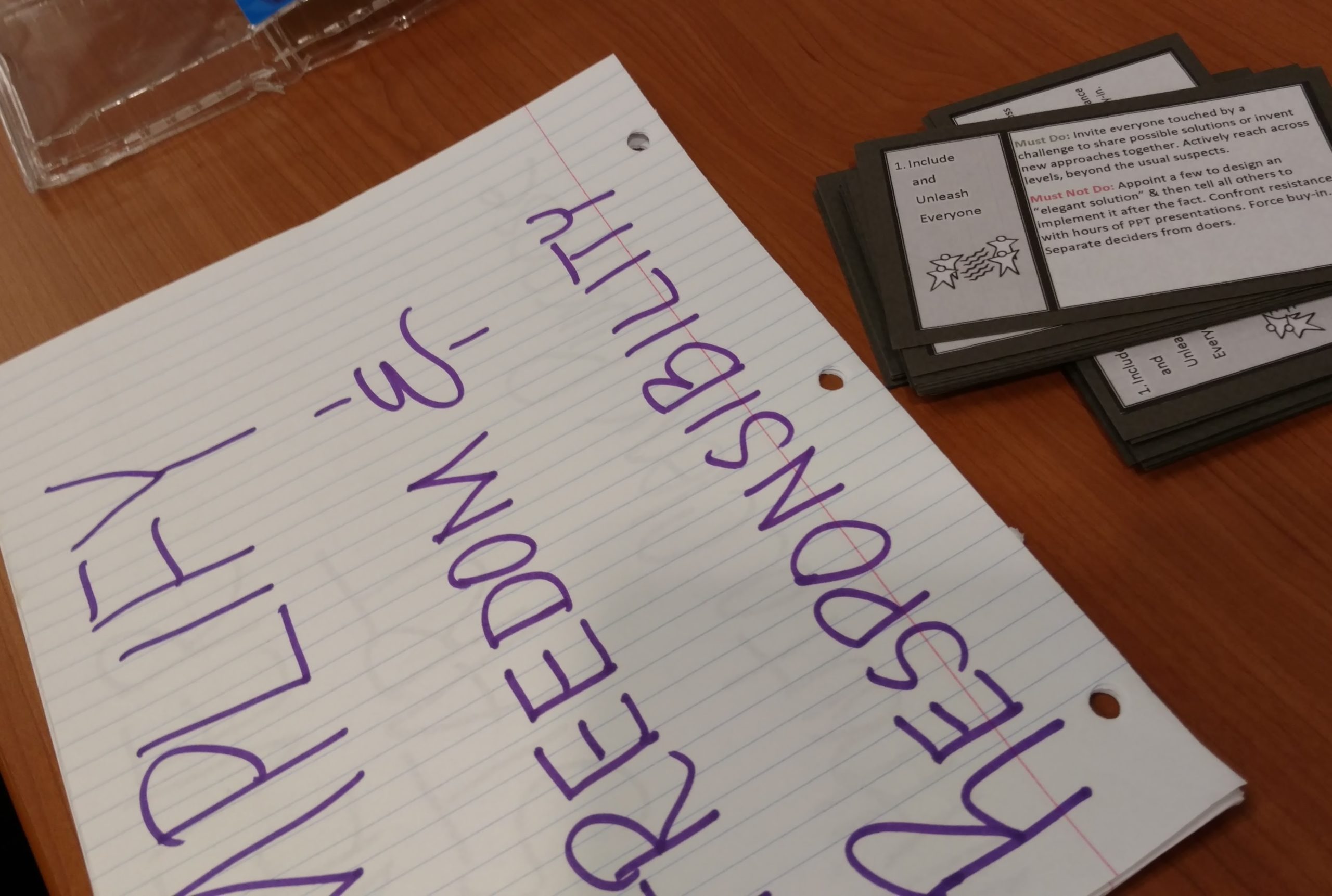
Image of a piece of paper with "freedom and responsibility" written on it
freedom and responsibility

Ah, 2017, such a quaint time when we still used Adobe Connect. 🙂 It was a pleasure to go back and re-read Jenny Mackness’ post, The power of silent learners | Jenny Connected.

While the post and the webinar it reflects upon focus on learning/education contexts, there is a lot we can extrapolate to today’s mix of online and F2F. It is always good to remind me, a person who thinks by talking (which is not just being an extrovert!), that people experience the world in different ways and we can use that diversity and design for it, or try to put it in a box. NOT!

The post gives a detailed report on the webinar Jenny attended, and why she liked it. What I like about her post is this question:

The main thought I have come away with is to question whether it helps silent learners to focus on them in this way. Jan Willem felt it does, because he feels that there is not enough recognition of what silent learners can offer. For me the danger is that in doing this we may reinforce the view that somehow silent learners are a problem and that we need to solve this problem by enabling them, empowering them, to become a bit noisier. Personally, I don’t think that learners can be empowered by others. They empower themselves, although they can be supported in doing this.

I appreciate Jenny’s observation. The more we try and HELP people, the more we risk actually diminishing them.

It appears that the day I saved the URL to Jenny’s post, I also saw something from Fast Company that suggests we avoid the binaries of alone/together, introvert/extroverts and use a pattern of small/large group alternation.

“The way to maximize creative potential is to flow between being alone and being in a group, and back again.”

This resonates with my approach to group facilitation and is, indeed, part of the fundamental patterns of approaches such as Liberating Structures. As noted in a previous post, this allows for nuance and context.

From the Archives: A call for wiser research on collective wisdom

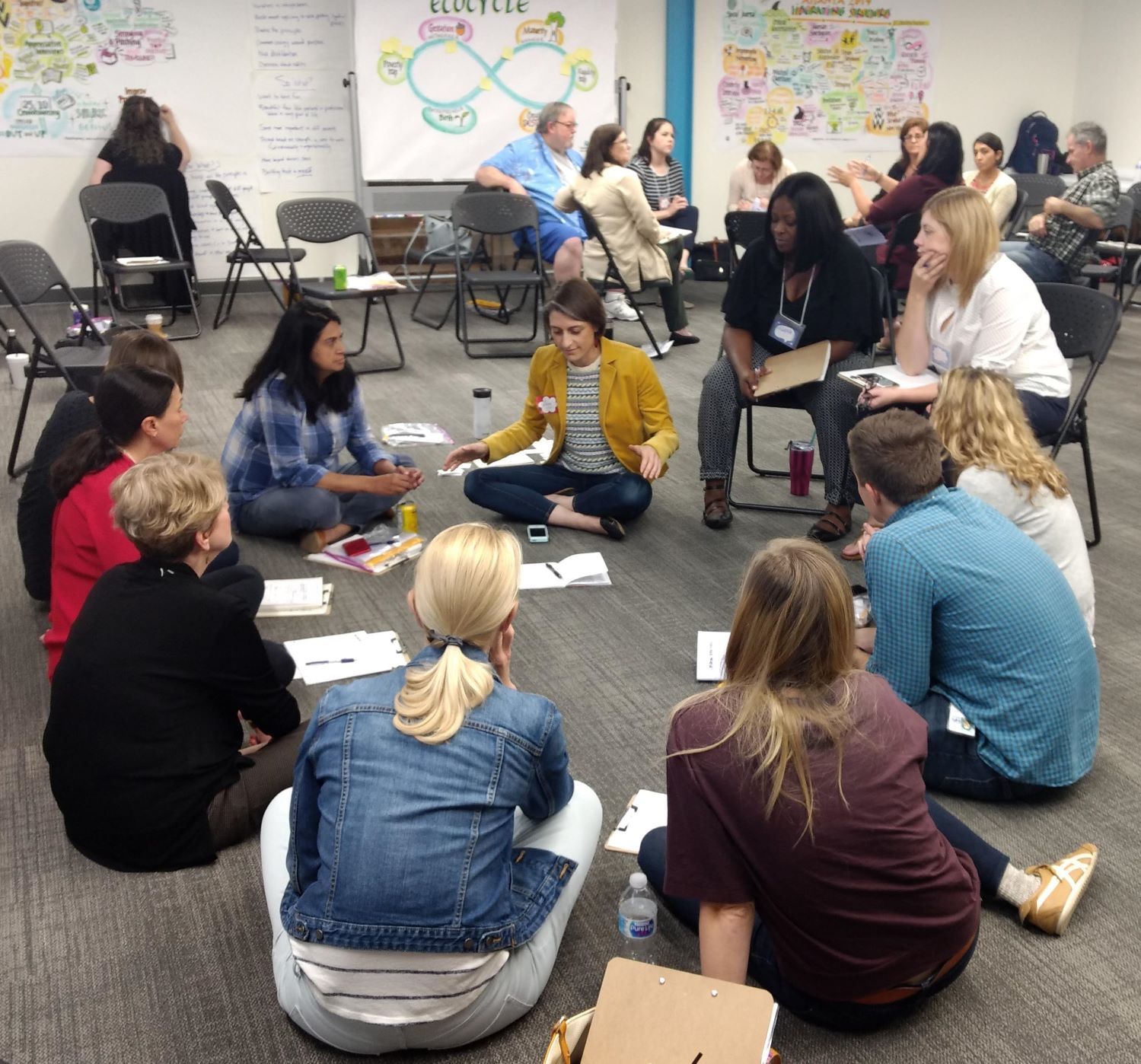
A group of people sitting on the floor in a circle in conversation

The amazing Tom Atlee wrote a post in 2014 calling for wiser research on collective wisdom. It is a powerful piece of writing and still worth your time to click on the link. What sticks with me is his attention to the need for (and inherent messiness) of including diverse voices in collective wisdom. From the days of George Floyd’s death in 2020 and the voices and conversations that emerged, we need to consider Tom’s ideas more than ever.

Here is a teaser to get you started…

I take issue with another major assumption of the “wisdom of crowds” thesis advanced by James Surowiecki, author of The WIsdom of Crowds – specifically, his bias against conversation, dialogue, and deliberation. Harri Oinas-Kukkonen summarizes that assumption as follows: “Too much communication can make the group as a whole less intelligent.”

This principle exhibits a profound ignorance of the varieties of communication and conversation – an ignorance that prevents researchers in the field from even glimpsing – to say nothing of clarifying – more comprehensive and authentic forms of collective intelligence and wisdom. Most forms of collective intelligence and wisdom are deeply dependent on the interaction of diverse entities, usually in the form of conversation.

When Surowiecki and his followers speak out against communication among the guesstimators in a “wisdom of crowds” exercise, what they are actually speaking out against (without realizing it) are interactions that reduce the level of diversity in the system. What produces the crowd’s accurate collective answers is aggregation of its non-manipulated diversity. This is one way to “use diversity creatively” – a central feature of collective intelligence. But this “wisdom of crowds” aggregation approach is limited to getting collective answers to questions of fact – including predictions (future facts) and currently unknown facts (like the location of a sunken submarine).

via A call for wiser research on collective wisdom.

Update on the Blog Draft Archives Project

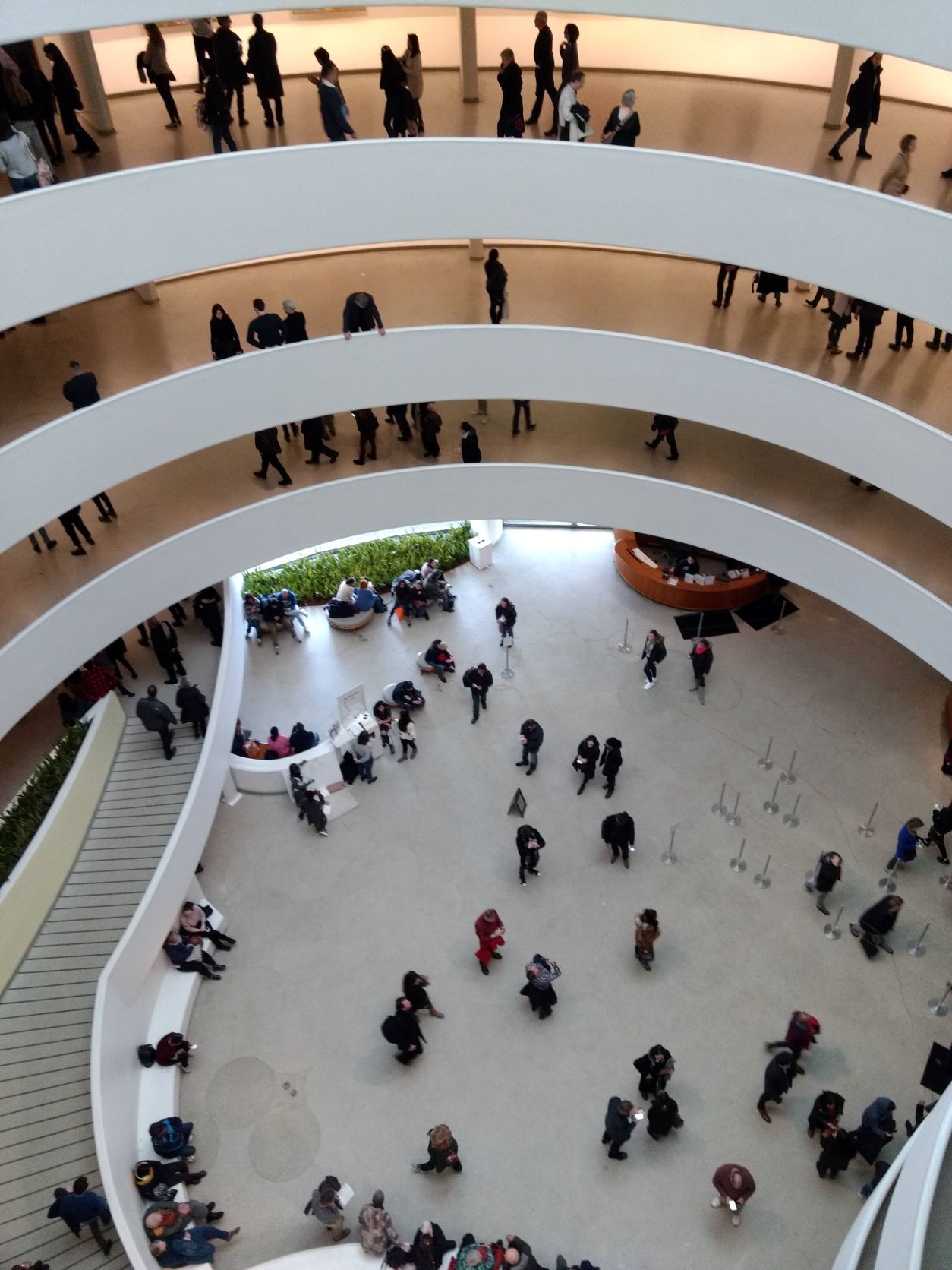
a picture from a balcony looking down at people walking, watching, connecting at the Guggenheim Museum, New York City.
People watching, people connecting…

Of the original 419 blog post drafts, 76 drafts remain. From the first post of this silly project in early December until today’s post, I’ve revived/edited or nearly simply reposted 68 posts. That nearly eclipses my early blogging frenzy in the late 90’s/early 2000’s when I posted snippets nearly daily… many of those posts are now inaccessible due to transitions of blog archives, but they are not lost. One day I will figure out if I should (and how to) reconnect them here.

I am now posting 2-3 per week. Of the remaining drafts, I estimate there are up to 40-50 viable posts. Some require real work, others just some light editing. Probably fewer of the latter. I’ve weeded out most of the drafts that refer to links that are now broken, unable to connect to the sources that inspired the post. That makes me sad.

Happily, some of you have left comments and we have reconnected — sweetness. It reminded me of the importance of leaving comments. Euan Semple, I keep trying to comment on your blog, but I fear I have so many different WordPress identities, I keep failing at logging on. I will work on that but I’ve posted imaginary comments quite a few times in the past few months. Harold Jarche, I was thrilled you were happy to get a comment from me on YOUR blog. Ton, Alan, Darcy, Joitske, Mark, Christy, Monica, Robyn, Patrick, and Stephen, thanks for your comments so far. The 10 of you give me more energy than you might imagine!