Virtual Peer Assistance & Mutual Support (MOIP#11)

What we don’t see beneath the patchwork on the surface…

This is 11th in a series of posts about the tidal wave of moving online in Pandemic-Covid-19. #1#2#3 #4 #5 , #6, #7, #8, #9 and #10. This post explores peer assistance and mutual support practices, building on a blog post last Spring about virtual peer assists. This is also in preparation for a KM4Dev Knowledge Café on February 18th on this topic. (Please, join us! 7:00AM PST, 16:00 CET)

We Are Connected

My colleague and friend, Helen Gilman, pointed me to a tremendous book by Robert McFarlane, “Underland: A Deep Time Journey.” Among other fascinating topics, McFarlane writes about how trees “talk to” and support each other through underground fungal networks. (See Suzanne Simard’s Ted Talk.) This reminded me that we often operate as apparent autonomous workers in our jobs — single trees — yet in fact our networks sustain and support us. We are part of a bigger whole without which we could not exist. Like looking just above the forest floor and not below, we miss the practices that generatively connect us. Unseen, but present. With this blog post I want to “observe” some of those practices we call “peer assistance.”

Here is the baseline I offer. Our greatest knowledge resource is each other. The knowledge we each carry, the perspectives and experiences around our knowledge, and our diverse contexts, gives us an immense, and decentralized resource.

Assistance: With useful peer to peer (P2P) practices, knowledge can be more accessible, freed from centralized organizational boundaries and gatekeepers. P2P practices can subvert the power of large institutions that can dominate with or perpetuate one view of the world, one knowledge perspective. P2P approaches can step around those who wish to protect, prioritize, or hoard knowledge. They can help us be aware and address racism and colonialism that has been baked into so many of our “expert-centric” practices.

Support: At a human level, P2P practices can engage each of us. They can respect the fact that we all have useful knowledge. We might feel a bit more empowered and a bit less vulnerable working at the peer-to-peer level rather than trying to show up in front of a large organization. Feel a little more human. We, and our knowledge, might be unleashed in more generative ways.

I’m interested in these P2P knowledge liberation practices, and particularly these days, doing them online. This post explores a common form of P2P, peer assists, and how we might expand the repertoire beyond them, and to include support as well as assistance.

Peer Assistance (and support!)

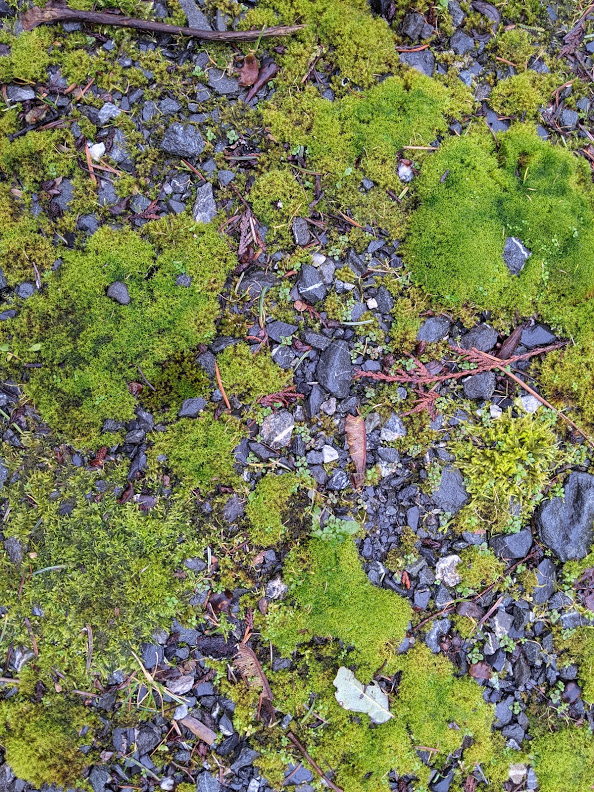
A fungus growing in a rotten tree near my house…

Peer assistance is NOT new. In the knowledge management (KM) world, it has been popularized by the Peer Assist format. (Doing them online is also not new, but it matters now, more than ever, with the pandemic.) I like the definition from ODI building on Purcell and Collison’s work that describes a peer assist as a “learning before doing” activity.” Learning before doing, or the process of learning before undertaking a task, activity or project.” (Learning AFTERWARDS with peers could be exemplified by an After Action Review.)

A common format for peer assists is to have the assistee – the person who needs assistance — convene a gathering with people they invite who may have useful knowledge or expertise to address the assistee’s challenge or task. “You know more than I do, please help me!”

There is an explicit recognition in peer assists that knowledge is power. Knowing “the right thing” to do is a central component. And yet, our challenges are not always about not knowing what to do, but moving beyond feeling alone and vulnerable when risking doing what we perceive we should. Knowing WHAT to do is different than doing it. Knowing HOW do do something is different than doing it. Understanding the context for doing it. Having the mindset to do it. Confidence? Enough “safety” to take the risk? This is where mutual support comes in. Recognizing that we are humans working with this knowledge.

P2P may also help us with another huge challenge we face. Bias, or more accurately, biases! An “expert-driven” view of assistance may be implicitly propagating the bias of dominant actors or cultures. It could deprioritize or even bury local and indigenous knowledge. Could P2P approaches help us a) be aware and b) step out of these traps?

KM4Dev, one of my core communities of practice, has been engaged in ongoing conversations both about decolonisation of KM, and, as always, about specific KM practices. (See these posts from Bruce Boyes and Charles Dhewa.) For example (and forgive the broad generalization) when we look at the implicit prioritization of recognized expertise, we may be practicing racism and colonialism. When we look at centralized knowledge practices — same.

In the time of COVID-19, we have focused on ONLINE practices. Online theoretically gives us more access to a wider diversity of peers and allow easy self-organization, rather than relying on a centralized source. Peer to peer methods online provide scaffolding to connect with other peers to assist in a member’s or members’ challenges and opportunities, often in a “just in time” or very contextually embedded context. I sense that they also offer a specific assumption that we all have knowledge that may be useful to others, not just the validated and/or high status “experts!” 

Below are a few starting peer assistance and mutual support options, building on a blog post last Spring about virtual peer assists. We will build off of this at our KM4Dev Knowledge Café on February 18th on this topic. (Please, join us! 7:00AM PST, 16:00 CET)

P2P Assistance and Support Online Practice Options

One approach to peer to peer assistance recognizes we each bring something of value, even if we aren’t identified (self- or by others) as an expert in a particular area. An example of a process that recognizes this distributed resource is Troika Consulting as defined in the Liberating Structures repertoire. Three people “sit” together, taking turns sharing their challenge, problem or idea, and get feedback from two peers. It is amazing that each time people report they received insights, even with perfect strangers.
As I think about Troika compared to traditional peer assists, Troika actively promotes the idea that everyone has something of value, not just the experts. It is easy to do with just three people (or 3x X). During the process, ALL THREE people can gain insights from their peers, not just one peer assistee. There is the distribution of engagement and value creation, regardless of role.

Another Liberating Structure is Discovery and Action Dialog. DAD, as we know it, builds on the idea of positive deviance – how can one person or group succeed at what the rest of us struggle with? Exploring where there are seeds of innovation and possibility through simple guided conversations through a series of prompts, and new possibilities emerge.

There are other Liberating Structures that do this sort of unleash/engage that we might not always define as peer assistance and support, as noted in my previous blog post. You can go there for specific examples. Longstanding group process traditions such as Open Space, World Cafe and the Art of Hosting also rest on this foundation of the value of our peers.

Connect the Micorriza!

Many years back when I was deeply involved in communities of practice (CoP) work, there was this persistent observation that people drew more confidence and a sense of support from their peers in their CoP than from their supervisors and direct team members. Freed from the constraints of organizational hierarchy and politics, peer support felt more genuine. To unleash ourselves, do we need our peers? I experience this as essential.

To decolonize or remove racism from our work, do we need our peers? I don’t know about you, but I can’t even imagine doing the work without my peers, both in figuring out HOW to do it (peer assistance) and the confidence to DO the work (mutual support.)

Resources

Designing and Hosting Virtual Field Trips (MOIP #10)

Moving Online in Pandemic is now #MOIP! This is 10th in a series of posts about the tidal wave of moving online in the time of Covid-19. #1#2#3 #4 #5 , #6, #7, #8 and #9.

I’ve mentioned my work with the Floodplains by Design network over the past few years. We have been doing a lot of experimenting and practicing with online meetings and events over the last 11 months. We captured a few of our practices and now I’ve drafted an article on Virtual Field Trips. And yes, I’m looking for your review to help improve it. Right now it lives on a Google doc where you can comment. You are also welcome to comment generally here. Care to help? I’ll post the intro below. And THANKS!

1. Introduction

At the Floodplains by Design (FbD) Culture and Capacity Action Group (C&C) November 2020 meeting, we recently reviewed and reflected upon our experiences and value of field trips to FbD project sites. (See figure 1.) COVID-19 has curtailed our face to face field trips, demanding a new, virtual way of meeting these needs. 

With the C&C’s focus on building and supporting a learning network, we are interested in the overall set of learning and network weaving practices that can help spread and deepen IFM. This document offers insights and useful practices for designing and implementing virtual field trips (VTS) to support Integrated Floodplain Management (IFM). It also helps us share in general the value of, and practices around field trips which are useful in our work together whether we are F2F or together online. It builds on our first document on Virtual Peer Assists.

We hope that through these occasional articles/resource documents we can make our learning more widely available across the FbD network and beyond. 

The first section of this document  reflects more generally on the purpose and value created through field trips. The second section addresses specific practices for planning and executing virtual field trips. A resources section follows for additional information.

Figure 1: Harvest from the November 2020 brainstorm on VTS

We created this first draft of useful virtual field trip practices using four guiding questions. 

  1. What general immediate and longer term value is created through field trips in our integrated floodplain management (IFM) work? This establishes a shared baseline understanding of field trips in IFM. 
  2. What specific purpose(s) and value creation do field virtual trips serve in our work right now? With whom? Clear purpose drives how we design our VFTs.
  3. What useful field trip practices have we learned for VTFs?
  4. How might we know when we are making progress on this purpose? Like any practice, we assume that as we learn, we can improve our practice.

I’m happy to post more here if that is useful… and know the doc got pretty LONG!

Moving Online in Pandemic #5: This is the time of creative destruction

This is 5th in a series of posts about the tidal wave of moving online in the time of Covid-19. #1#2#3 and #4 Slide deck and artifacts for the event.

Many people learning together

It is being said around the globe: move a bad meeting online and you have a terrible meeting. People are already in “zoom fatigue” and are “Zoombie Zombies.” The signal is loud and clear: we need to figure out what to stop doing so that we can focus on what is truly important.

In talking to people desperate to figure out their next move with strings of critical upcoming face to face (F2F) events, it has become clear that one way forward is to first DEconstruct. Get clear on the deepest purpose of each meeting or event. Figure out what NOT to do or to STOP doing, and prioritize only those things that will move them towards their goals. That was the signal I was sensing when I wrote about Ecocyle to notice what is shifting a couple of weeks ago.

Now is not the time to simply tick the task box as done.

I decided I wanted to engage my communities of practice in figuring out how to help people DEconstruct and then REconstruct. Thus was born the DEConstruct/REConstruct episodes. The idea is to put together a string (sequence) of Liberating Structures that groups can use on their own or with a facilitator to focus on essentials, and then, and only then, move into design and facilitation considerations of what is born anew through the process.

I asked one of the people calling for help if they would help us “learn in public” by going through a rapid version of the deconstruct/reconstruct (D/E) process online in a Zoom meeting. I proposed we would do this in a “fishbowl” context with the team from the organization being the fish swimming through the process, and observers in the fishBOWL (fish bowlers) first listening, then breaking out into small groups to offer questions and suggestions to the fish team.

By using this learning in public approach, we could also facilitate a few other things. Potential facilitators and consultants in the bowl could reach out and offer support (getting me out of the matchmaking position). And the wise crowd in the bowl could give suggestions to improve the process.

My friend and colleague Eva Schiffer brought her team as the fish for Episode 1 yesterday. This group has the challenge of redesigning what was going to be a two week field based capacity building program in an African country. There were multiple levels of travel – of the consulting team to the country to work with their government partners, then out into the field with private sector wildlife conservation partners. Now none of these folks can travel. AND the pandemic is creating an new challenge for those using tourism as a way to preserve ecosystems.

In preparation for the fish bowl I shared the six questions I’d ask and we spend just 30 minutes on a call to walk through the process. Through some email back and forth there were just initial consideration of the questions because we wanted the conversation to be fresh and alive during the Zoom gathering. I also set up a Google Slides deck with the meeting agenda, process overview, a slide for each of the six questions for note taking, and then templates for note taking by the fish after their breakouts.

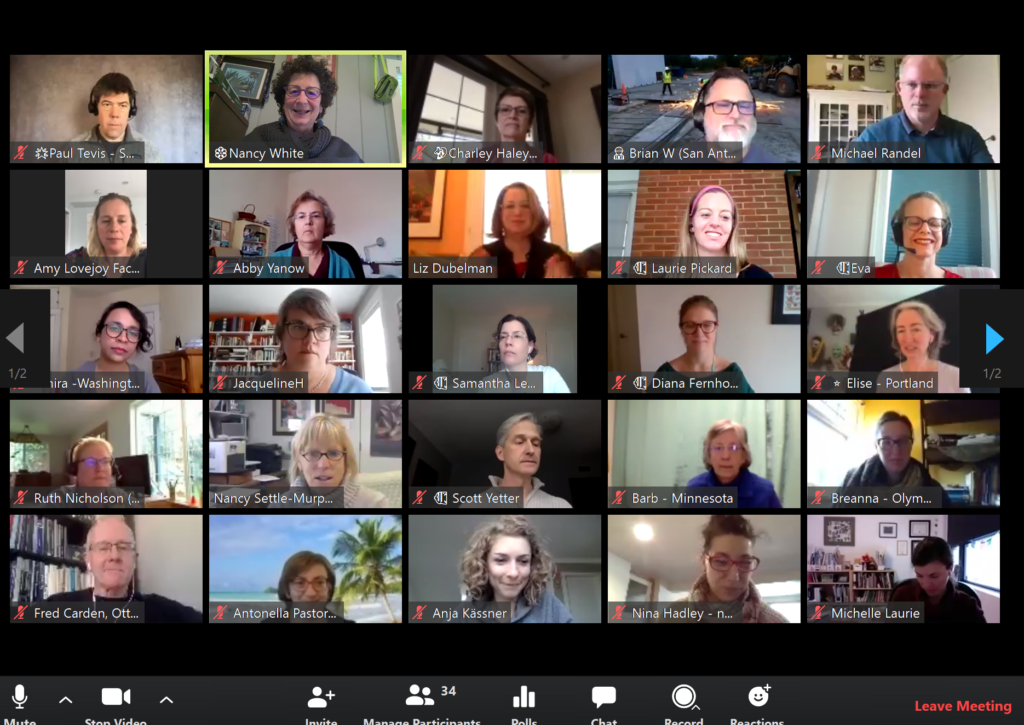
By start time we had 48 people on the call (out of 66 registered), six fish and the rest bowlers. After brief verbal introductions of the fish, and text introductions by the bowlers, we dove in with a story of their current challenge.

Next we launched into the deconstruct using the six questions from Strategic Knotworking. Here are the six questions.

  1. What is the deepest purpose of our work through this gathering and why?
  2. What is happening around us that demands change (in how we were planning this gathering –go deeper than social distancing if possible!)?
  3. What challenges and wicked questions do we face in achieving our purpose?
  4. Where are we starting, honestly? 
  5. Based on what we have learned, what is now possible?
  6. What is our first step and how will we know we are making progress towards our purpose?

Over the course of the next 45 minutes we focused primarily on question 1, around purpose, really digging past the signposts of their contract deliverables. Then we spent a few minutes on questions 2-4 to set context, challenges and baseline. I mentioned that question 4, “where are we starting, honestly” really benefits from a deeper look and suggested the use of Ecocycle Planning both to map out their project activities AND relationships. The team consistently talked about the importance of relationship and trust which typically they develop and deepen in F2F moments.

Finally we got to the really juicy question, “based on what we have learned, what is possible now?” That is when I felt the shift from what was, to what is now possible. The team thoughtfully balanced both their responsibility to their client (contract, deliverables) and the unique opportunity afforded by the shift online. Instead of the human and financial constraints (we can send the four people who are willing to travel), they realized they could tap more widely into the talents of their own team beyond the four. They could potentially engage more of their government clients and their private sector partners at a time when those partners are most stressed and could use support, even if there was no immediate money or business deal to be had.

Next we did breakout groups of 4-6 with the bowlers where they formulated a sharp, insightful question(s) and their most salient advice for the fish. They put these in dedicated slides (one for each group). While the bowls were doing this, the fish went into their own breakout room to make sense of what was happening. This unplanned innovation proved really helpful for the fish. So I want to repeat that twist – maybe keeping the fish in the main room so the facilitation team can learn from them. We’ll find out tomorrow when we try Episode #2

Take a peek at the insights from the Bowlers in slides 20-30 .

Finally, we did a VERY FAST (too fast?) What? So What? Now What? process and captured the insights in chat. I feel we could have gotten more out of this, but it was also important to stick to the 90 minute window.

Debrief

When faced with new constraints, we are able to leap past our old habits, assumptions and ruts. Something new becomes possible. This is at the heart of the idea of creative destruction and DEconstruct before REconstructing.

Looking across the amazing notes of the 7 bowl groups and the overall chat, including the debrief for those who stayed on for an additional 10 minutes, I think there was a) enough value to repeat this experiment next week with another NGO, b) gather and share a bit more information for the bowl folks so everyone get dive in quickly, and c) run the experiment one more time to see which questions deserve what amount of time.

We rushed through some great stuff, probably missed some stuff and really filled the 90 minutes, but it would have been wonderful to get the bowl engaged sooner and more interaction between the fish and the bowl. It would have been really wonderful to let the fish debrief themselves before we finished. That is lot in 90 minutes.

I was surprised that some actionable ideas emerged even before we got to the action planning question #5 – particularly Liberating Structure ideas that could be used in the deconstruction and assessment elements that could pull out some of the more complex issues and help the team prioritize actionable next steps.

As I second guess myself, I need to remember that my goal was not that these experiment could be fully completed – the full deconstruct and reconstruct – in 90 minutes, but to start the process. To explore and test the process. To connect people around the process. I think many of us hungered to fully DO the process which tugs at us. We want good things for each other and results. So I need to frame that this is a starting point.

I’m not sure if anyone followed up with anyone for the matchmaking intention. We’ll see if that shows up. I plan to check back with my fishes over the coming weeks to see what happens and will invite them to write up their reflections if that is helpful.

If you would like to be the FISH in the DE/RE bowl, please leave a comment before. We have more facilitators stepping up to do more!

Resources:

https://www.eventbrite.com/e/deconstructreconstruct-your-meetings-online-episode-2-tickets-101316392056

Timezone Converter Link

Moving Online in Pandemic: Preamble

EDITED: To include more on differentiation/integration. I had the terms all wrong. Go figure! And to add a link to a group for online facilitators considering how to support the rapid move to online meetings. Join here.

I am going to share a series of blog posts over the next days about how to move your group interactions online. For me, however, there is some starting context, a preamble, if you may. Skip this if you want to get right to the point. Come back to it later if you wish. However, if you are feeling fear, confusion, frustration, stop and take a minute with me to breathe and reflect.

Here we go…

The emails have been flying, phone and Zoom conversations everywhere asking “how do we move this meeting, event, workshop, whatever online in response to the novel Corona virus outbreak?” With each conversation, observing intense online conversations, I keep asking myself, what can I contribute? As an early student, teacher and writer on online facilitation, I sense I can be of use. What should I do?

In typical Nancy fasion I jumped into action, started up an email list, opened a Google Doc to share resources, responded to individual requests for help. Boing, boom, zip, zap!

But it felt like I was missing something fundamental. All that disconnected response. As I look back, three moments helped solidify my focus.

The first was in a conversation with Neil McCarthy on Thursday. We were swapping our group process design principles and heuristics. Everyone was asking “how do I move this meeting online?”

Neil shared his understanding about the need for holding space for people to be individuals (Jungian “Individuation“), to be heard, to be different, and holding space for people to find common ground and move forward. His pragmatic example of HOW is the power of letting people first talk in pairs to establish their own thinking, perspective and even identity BEFORE trying to work towards group movement forward or even cohesion. This is why both of us really find utility in Liberating Structures, particularly the foundation pattern of 1-2-4-All (in any variation – 1-2, 1-3-all, etc.)

EDIT: I got a bit more information from Neil. He shared that it is differentiation/integration theory. “I got the phrase from Marv Weisbord and Sandra Janoff book “Don’t Just Do Something, Stand There“. A great book for “leading meetings that matter.” It also shows up in Dialogic Organization Development, edited by Bushe and Marshak, but they don’t call it D/I theory. Peter Block in his book Community: the structure of belonging, uses phrases like “If I cant say no then my yes doesn’t mean anything.” These are all referencing the same concept. ” THANKS, Neil!

In many online meetings there is this fundamentally flawed assumption that we can automagically do everything together at the same time. Neil’s very clear articulation helped me suggest a pattern for online design that might easily shared. It was a systems insight at a pretty find grained level.

A second shimmer of insight at the much broader systems level arrived at the end of 90 minutes online Zoom gathering with more than 100 people from the EU wrestling with how to move so many meetings online. After the formal end, some of us stuck around to debrief. I summarized by saying “Don’t just look at your technology choices. Pay attention to what is shifting. Use something like the Ecocycle to get a sense of what is happening at a systems level. It might help you discern useful first steps and set a direction forward.” Something resonated, even as I was forming my understanding while thinking. (Thank you brain, for working even when I’m not really trying!) You will see the Ecocyle in action in the next post of this series!

Finally, I woke up early early this morning and read the day’s meditation response shared by a friend (Thank You Rachel!), “The Law of Least Effort.” Here is a snippet (I’m working on the source and will edit it in once I’ve secured it.)

“When your actions are motivated by love, your energy is multiplied and accumulated. Release of this energy allows you to redirect it towards the creation of everything that you want. When your spirit is your inner point of reference, all of the immense power of the Universe is at your disposal. You can then use this energy creatively, moving toward abundance and evolution.”

Abundance. Love. Evolution.

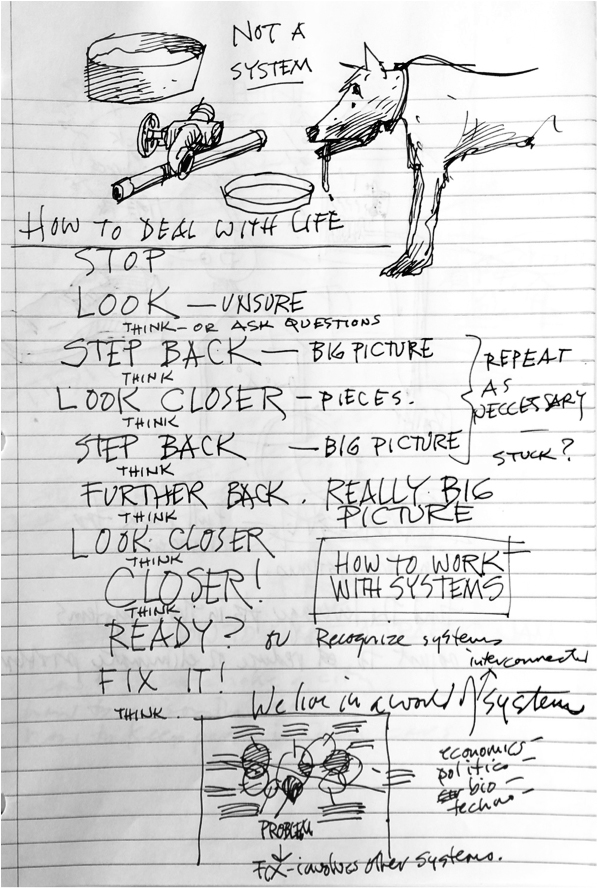
Balance that message with all of the fear, partisanship and rancor that flows over us from the media. Some of it alerts us to act. Some of it cripples us. Then, all of a sudden it hit me. Go back to the fundamental principles shared by Donella Meadows in her seminal work, Leverage Points: Places to intervene in a system. She so elegantly called this “dancing with the system.” I want to share one image from http://donellameadows.org/a-visual-approach-to-leverage-points/ that brings some of this playful approach to deadly serious issues.

The point? Start by stopping, looking, stepping back, look closer, step back, further back, look closer, closer, ready? FIX IT. These are the PRACTICES that allows us to dance with systems, to use the 12 leverage points Meadows so lovingly discovered, crafted and shared.

So if you, like me, sense a call, an invitation to to do something, but are feeling overwhelmed, consider the meditation. Consider Donella Meadows insights and then situate yourself in the place where you can contribute, from the micro to the macro. Join with me or some other person. (Don’t do this alone…)

The invitation calling me is “How can we stay connected to each other in any way in a time of social distancing?” The pragmatic manifestation of that will be to think with fellow practitioners, share practices, insights, ideas and inspirations on how groups can productively meet, engage, connect and then experiment and iterate to make progress online in a way that builds on our strengths and helps us move past fear into abundant action.

Please join me. Part 2 will be up within 24 hours.

Joint Use in Online Spaces

An article in the New York Times caught my eye a while back about the power of joint use of schools and churches as community spaces for exercise, play and other community activities, particularly for communities where there is a lack of park space, or inability for the average community member to pay for private gyms and play areas. I’ve put a snippet at the bottom to lure you to read the whole thing because I think this concept of Joint Space may be a powerful antidote to what is happening with Facebook, Google and others being owners of the online spaces, and thus owners of our data.

Today, Stephanie West Allen posted (on Facebook, natch!) a link to Raph Koster’s work on games and the idea of the “magic circle.” (See https://www.theoryoffun.com/tfall.shtml ) Again, this piece about space being essential.

“The arena, the card-table, the magic circle, the temple, the stage, the screen, the tennis court, the court of justice, etc., are all in form and function play-grounds, i.e., forbidden spots, isolated, hedged round, hallowed, within which special rules obtain. All are temporary worlds within the ordinary world, dedicated to the performance of an act apart.”

Read the New York Times and Raph Koster pieces together and some tinglings of ideas start emerging. Are our online convenings “performance” — of “an act apart?” Or part of a larger circle that is both online and offline?

We have flocked to Facebook and other online spaces as a “third place” to connect, gather and do things together. Because of the way our social media spaces are designed, they tend to become silos of people most like us, rather than places where we might rub elbows with the diversity of our communities.

A common scenario is a swap in which a city will indemnify a school in exchange for the school opening its gates for community use, resulting in “a new park that’s been sitting there all along — taxpayer paid,” Winig said.

The concept also extends to rural churches, making fitness part of the lifeblood of these community staples along with meetings, weddings and funerals. At the First Missionary Baptist Church in Concord, N.C., Theoma Southwell, the parish nurse, worked with the county health alliance to include a mile-long walking trail and a fitness class for older people. “ If you don’t feel well physically you won’t feel well spiritually,” Southwell observed. “They all go together.”

Unlike Uber, Airbnb and other shared economy juggernauts — profit-makers all — opening up schools, churches and other buildings for public use during off hours represents something far more powerful: shared health programs in communities in which having a safe place to kick a soccer ball or unwind with an evening run has not been an option. It is also common-sense land use policy, representing the recycling of resources instead of building anew.

“Joint use is a winner because it is simple,” said Harold Goldstein, director of Public Health Advocates, a nonprofit organization based in Davis, Calif. “In policy jargon, we call it a no-brainer.”

Source: Sharing Public Spaces to Improve Public Health – The New York Times