
Update: Part 3 is here.
It is hard to let some Tony Karrer disappointment persist. After posting my 4 Meta Skills for Learning Professionals in response to Tony’s July “Big Question,” he commented:
Nancy – I was super excited when I saw that you had posted on the topic. But you surprised me because I expected something quite different. I like your meta skills, but …
I was hoping that you would provide insight into the core skills and knowledge around communities and networks that learning professionals should have?
As you know, I strongly believe that in the future all knowledge workers will need the ability to effectively participate in communities and navigate networks in order to perform their work. And, this is one of the bigger skill gaps that exists.
What’s the 5 minute and 60 minute learning piece that all knowledge workers should have to go through so they will be better at this?
Then, going to learning professionals, I think there’s an additional level that is community / network facilitation. As learning increasingly happens through communities and networks, learning professionals need to be able to facilitate this.
Again, what’s the 5 minute and 60 minute learning piece that all learning professionals should have to go through on this?
Tony, I’m glad you were super excited. And I’m sorry I disappointed you! So I’ll bite. But I’m worried about the 5 minute thing. I don’t think community skills reduce to 5 minutes. We can certainly talk about them in 60. But learn them? Uh uh. That may be blasphemy in a 140 character world. Fast is not always the best or only way. So maybe what you are looking for Tony is the 5 and 60 minute rationale pitch! 😉 Instead, I’ll offer some 5 minute conversation starter questions for each element. This might be interview questions if I were hiring… 😉
A bit more on why I don’t think this can always be fast? Maybe it is because at their root, community skills are very related to the four “meta” skills and are acquired not just through explanation, but through practice. Like most valuable skills, knowing they exist is just the door opener.
Learning Community/Network Skills for Knowledge Workers and Learning Professionals
First, some context. I deeply appreciate that Tony distinguished between community and network learning skills. While there is overlap, my experience is that there are some fundamental differences. (See this post for more on me, we and the network).
Additionally, I pondered a bit the distinction between “knowledge workers” and “learning professionals” and in my heart of hearts, I have a bias that knowledge workers are learning professionals, but perhaps not always responsible for the learning of others. But I do think facilitation is a key knowledge workers skill in the network era, so for the sake of this post, I’ll treat the two the same but recognize that is oversimplification. And in Part 3 I’ll look at some of the differences when it comes to facilitation…
Ok, here we go!
 Scanning
In a world of information abundance, knowledge workers and learning professionals need to be able to scan, both through the discerning use of aggregating technologies and their own ability to quickly read, and estimate the quality and value of the information passing by them in this “river.” An adjunct and related to the next two skills is the ability to generally bookmark or capture material relevant to their immediate needs and work. (One simply can’t do this for everything, thus the caveat.) The five minute questions would be to ask 1) What are your daily information scanning practices? 2) How do you maximize the effectiveness and efficiency of that time but still hold enough space for the unexpected and different, that stretches your learning beyond what you think you need to know? (In other words, how do you keep from getting stuck in a particular information rut?)
 Filtering
Filtering is picking and choosing from what you scan to apply it or share it with others. This is an added layer of discernment over scanning and a more systematic practice of tagging and saving, and a connecting of information to work and other people. This is also tied to the next skill of connecting. The 5 minute questions would be 1) how do you pick from the material scanned to go to the next step of using or acting on that information? 2) How do you amplify the value of your scanning and filtering so it has applied value to you and to others both directly in your communities, more peripherally in your networks? (I.e. do you annotate your bookmarks? How? Why?)
 Connecting
As Juri Engstrom has noted, successful social networks are not just about people connecting, but people connecting around content or information objects that matter to them. Today’s knowledge worker connects to people with whom she has direct relationships with and interacts with on a personal level, and with people she connects with around information or objects, where the relationship is about the content, not (at least initially) the people. It is object-centric relationship. The skills knowledge workers need is to be able to find and form connections, keep track of them, and have ways to activate them. The latter is related to community leadership and network weaving. But at this skill level, I’m talking about connecting people and information.
Note: writing and verbal communication are key skills underneath connecting. If I were to be hiring someone today, I’d want to see them read and write under pressure. 😉
Again, this is a combination of savvy use of technology, the combined application of scanning and filtering joined with the connective tissue of relationships and networks. 5 minute questions? 1) What are your key learning communities and networks and how did/do you find them? 2) What practices do you use to activate your communities and networks to achieve particular goals? 3) What do you do to give back and nurture your communities and networks?
 Synthesizing & Sense Making
A river of information is only the raw material for knowledge work or learning. It is in the synthesis and sense making that it becomes useful to individuals, communities and networks. Sense making is part education, part experience and practice, and part natural talent. Some people work towards sense making in a linear, step by step fashion. Others are more global thinkers, hopping around the information seeking patterns. In our world, the global thinkers tend to be activating communities and networks and the linear thinkers help dig deeper. We need the full range. So if you are a learning professional who is a linear sense maker, partner with a global thinker and you then have more of the network and the thinking at your fingertips. 5 minute questions might include: 1) What are your practices and how much time do you allocate for synthesizing and making sense of the information that flows by you? 2) How do you leverage your communities and networks to help you make sense?
 Asking Good Questions
This probably should have been one of the meta skills because it goes to scanning (what am I looking for), filtering (what has value), synthesizing (what does this mean), connecting (who might use this?) , reflecting (did this work?) etc. But when I talk about asking good questions, it is beyond simply remembering to ASK in the first place, but when asking others, to ask questions that deepen knowledge and learning. Questions open up possibilities both for the individuals involved, and for their wider communities and networks. They are key to innovation and ownership of learning. Peter Block is a master at asking questions about community and commitment to one’s community. The folks at Strachan Tomlinson send out a weekly email newsletter with incredible, thought provoking questions. Check out Dorothy Strachan’s book, Making Questions Work.
 Technology Stewardship
Like it or not, technology is a reality of our lives as knowledge workers and learning professionals, so we had better have basic, functioning skills that allow us to find, evaluate and use technologies relevant to our work. If we are stewarding for our communities and networks, we have to add the elements of helping others develop their technology practices, scan for and learn from the practices of other individuals and help fold that into the community and/or network practices. This means not being dogmatic about tools because “they work for me” recognizing that technology is designed for groups, but experienced – and experienced quite differently – by individuals. The 5 minute questions? 1) How do you learn about and learn to use new technologies? 2) How do you introduce and coach others to use technologies? 3) How do you integrate practices across 2 or more technologies?(integration)
Dang, this is getting long. I think I’ll continue in a part 3 tomorrow to include Community Leadership, Network Weaving and Reflective Practice. Phew! But, of course, don’t forget the Four Meta Skills.
Tony, is this more of what you were hoping to see?
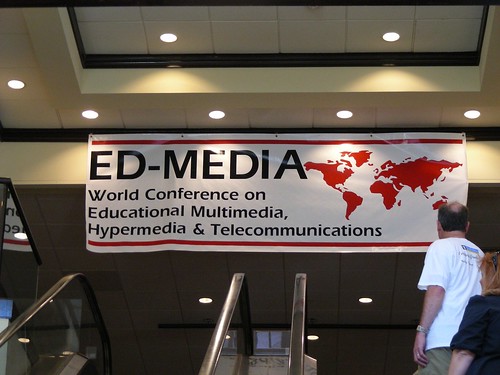 Ostensibly, a conference –
 ![Reblog this post [with Zemanta]](https://img.zemanta.com/reblog_e.png?x-id=045e0ba9-1106-4075-9115-7a433a9f2255)
 I was going to say “online community management” in the title, because I know that is a hot search term, but I just could not do it. What Simon Hearn of the
  As part of