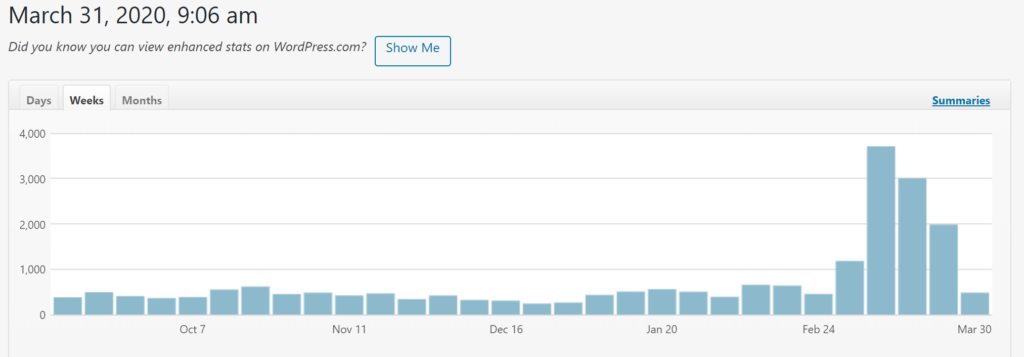
For years I’ve been saying seven people read my blog and I thank them. Well, now it seems with everyone online, people are reading blogs again! And a testament to the power of networks as we share and amplify!

For years I’ve been saying seven people read my blog and I thank them. Well, now it seems with everyone online, people are reading blogs again! And a testament to the power of networks as we share and amplify!

This is 5th in a series of posts about the tidal wave of moving online in the time of Covid-19. #1, #2, #3 and #4 … Slide deck and artifacts for the event.

It is being said around the globe: move a bad meeting online and you have a terrible meeting. People are already in “zoom fatigue” and are “Zoombie Zombies.” The signal is loud and clear: we need to figure out what to stop doing so that we can focus on what is truly important.
In talking to people desperate to figure out their next move with strings of critical upcoming face to face (F2F) events, it has become clear that one way forward is to first DEconstruct. Get clear on the deepest purpose of each meeting or event. Figure out what NOT to do or to STOP doing, and prioritize only those things that will move them towards their goals. That was the signal I was sensing when I wrote about Ecocyle to notice what is shifting a couple of weeks ago.
Now is not the time to simply tick the task box as done.
I decided I wanted to engage my communities of practice in figuring out how to help people DEconstruct and then REconstruct. Thus was born the DEConstruct/REConstruct episodes. The idea is to put together a string (sequence) of Liberating Structures that groups can use on their own or with a facilitator to focus on essentials, and then, and only then, move into design and facilitation considerations of what is born anew through the process.
I asked one of the people calling for help if they would help us “learn in public” by going through a rapid version of the deconstruct/reconstruct (D/E) process online in a Zoom meeting. I proposed we would do this in a “fishbowl” context with the team from the organization being the fish swimming through the process, and observers in the fishBOWL (fish bowlers) first listening, then breaking out into small groups to offer questions and suggestions to the fish team.
By using this learning in public approach, we could also facilitate a few other things. Potential facilitators and consultants in the bowl could reach out and offer support (getting me out of the matchmaking position). And the wise crowd in the bowl could give suggestions to improve the process.
My friend and colleague Eva Schiffer brought her team as the fish for Episode 1 yesterday. This group has the challenge of redesigning what was going to be a two week field based capacity building program in an African country. There were multiple levels of travel – of the consulting team to the country to work with their government partners, then out into the field with private sector wildlife conservation partners. Now none of these folks can travel. AND the pandemic is creating an new challenge for those using tourism as a way to preserve ecosystems.
In preparation for the fish bowl I shared the six questions I’d ask and we spend just 30 minutes on a call to walk through the process. Through some email back and forth there were just initial consideration of the questions because we wanted the conversation to be fresh and alive during the Zoom gathering. I also set up a Google Slides deck with the meeting agenda, process overview, a slide for each of the six questions for note taking, and then templates for note taking by the fish after their breakouts.
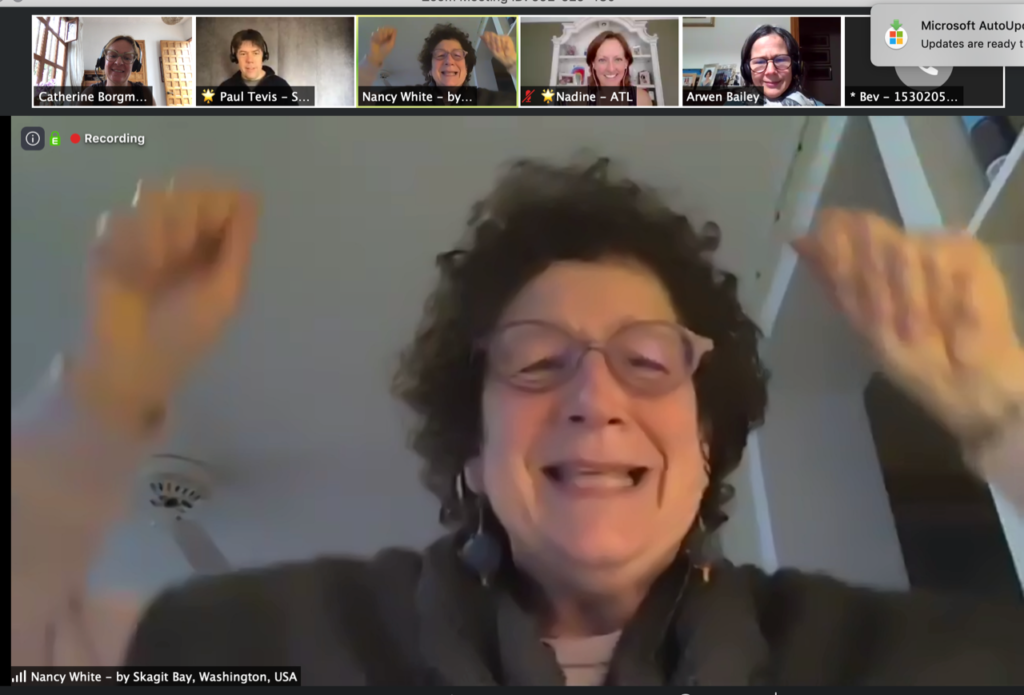
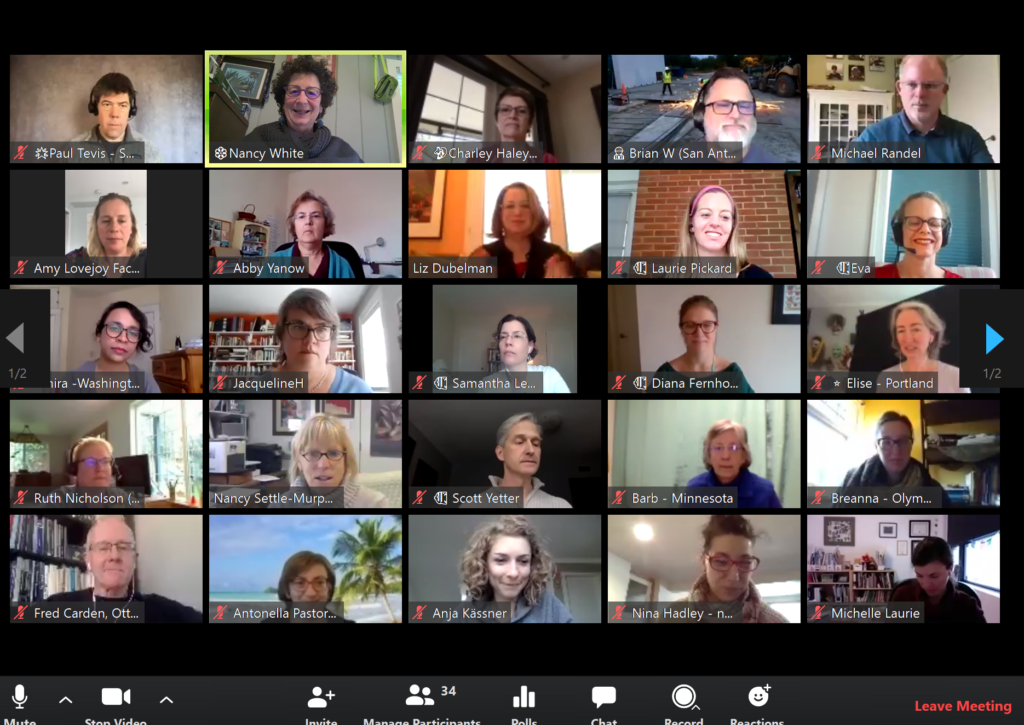
By start time we had 48 people on the call (out of 66 registered), six fish and the rest bowlers. After brief verbal introductions of the fish, and text introductions by the bowlers, we dove in with a story of their current challenge.
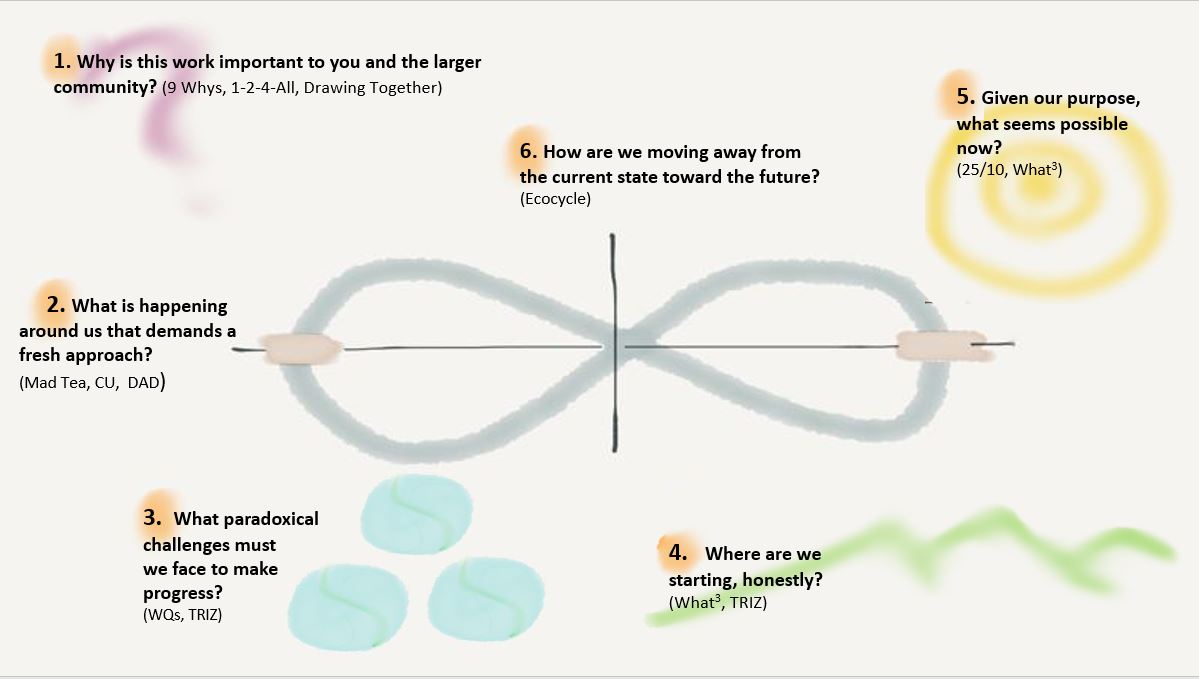
Next we launched into the deconstruct using the six questions from Strategic Knotworking. Here are the six questions.
Over the course of the next 45 minutes we focused primarily on question 1, around purpose, really digging past the signposts of their contract deliverables. Then we spent a few minutes on questions 2-4 to set context, challenges and baseline. I mentioned that question 4, “where are we starting, honestly” really benefits from a deeper look and suggested the use of Ecocycle Planning both to map out their project activities AND relationships. The team consistently talked about the importance of relationship and trust which typically they develop and deepen in F2F moments.
Finally we got to the really juicy question, “based on what we have learned, what is possible now?” That is when I felt the shift from what was, to what is now possible. The team thoughtfully balanced both their responsibility to their client (contract, deliverables) and the unique opportunity afforded by the shift online. Instead of the human and financial constraints (we can send the four people who are willing to travel), they realized they could tap more widely into the talents of their own team beyond the four. They could potentially engage more of their government clients and their private sector partners at a time when those partners are most stressed and could use support, even if there was no immediate money or business deal to be had.
Next we did breakout groups of 4-6 with the bowlers where they formulated a sharp, insightful question(s) and their most salient advice for the fish. They put these in dedicated slides (one for each group). While the bowls were doing this, the fish went into their own breakout room to make sense of what was happening. This unplanned innovation proved really helpful for the fish. So I want to repeat that twist – maybe keeping the fish in the main room so the facilitation team can learn from them. We’ll find out tomorrow when we try Episode #2
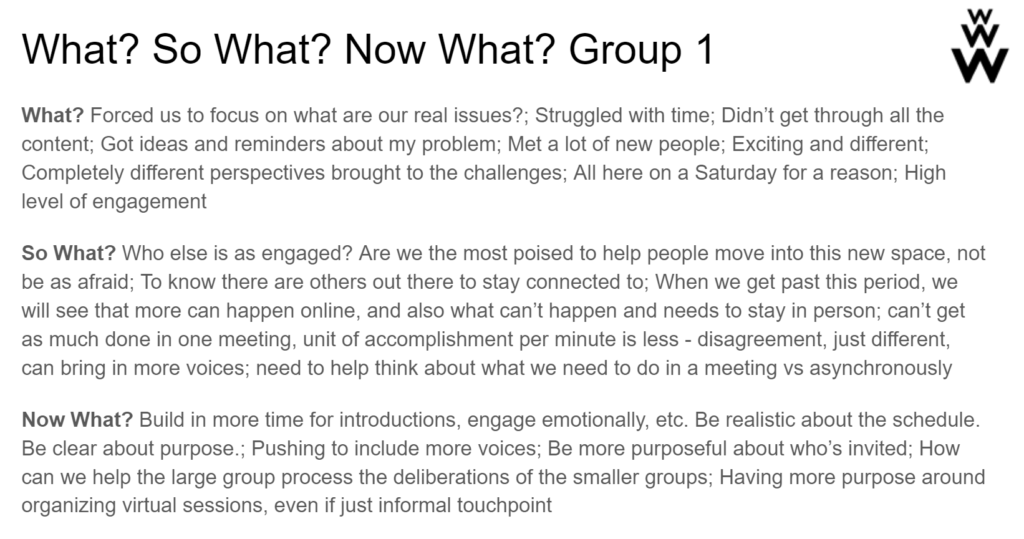
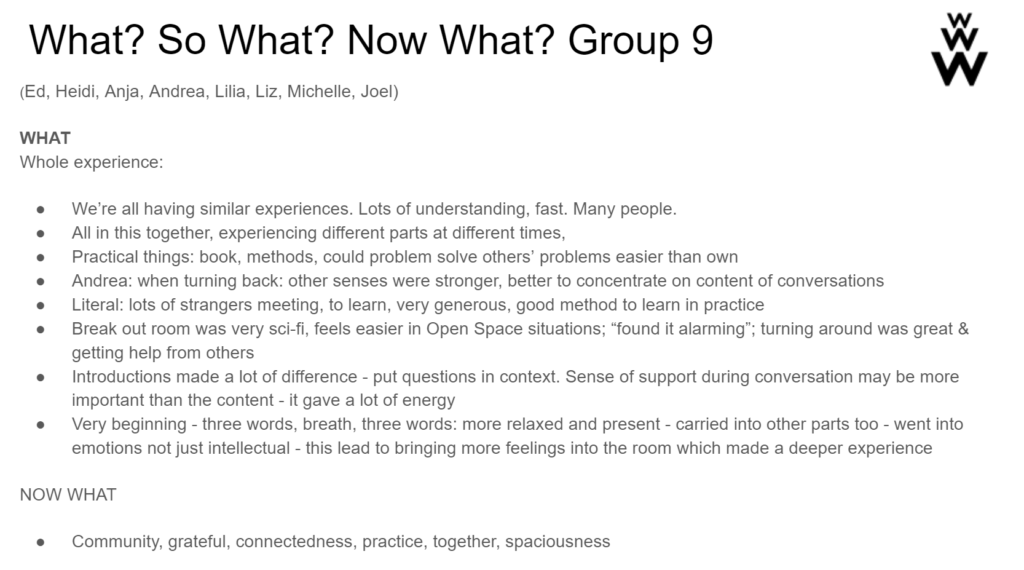
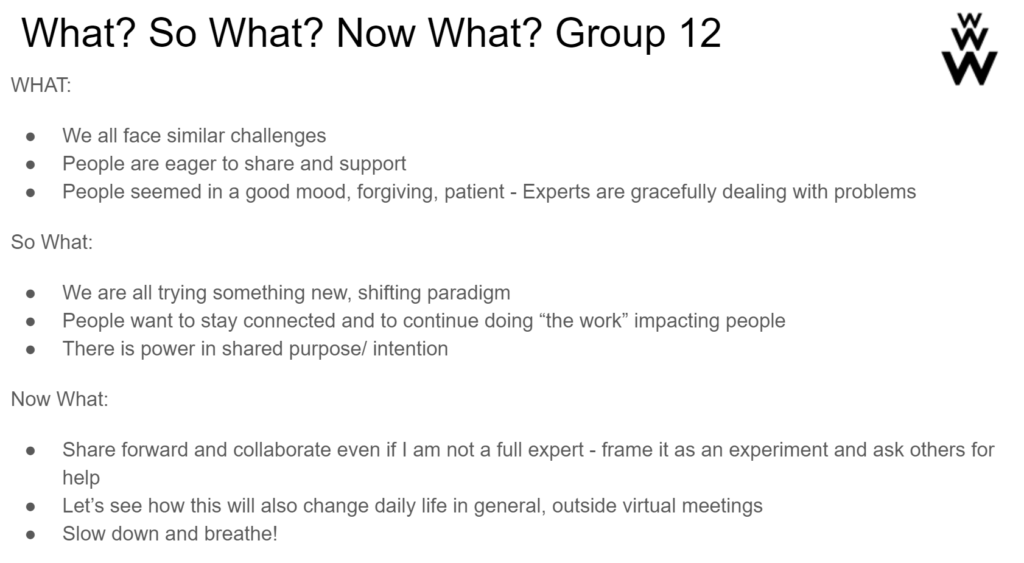
Take a peek at the insights from the Bowlers in slides 20-30 .
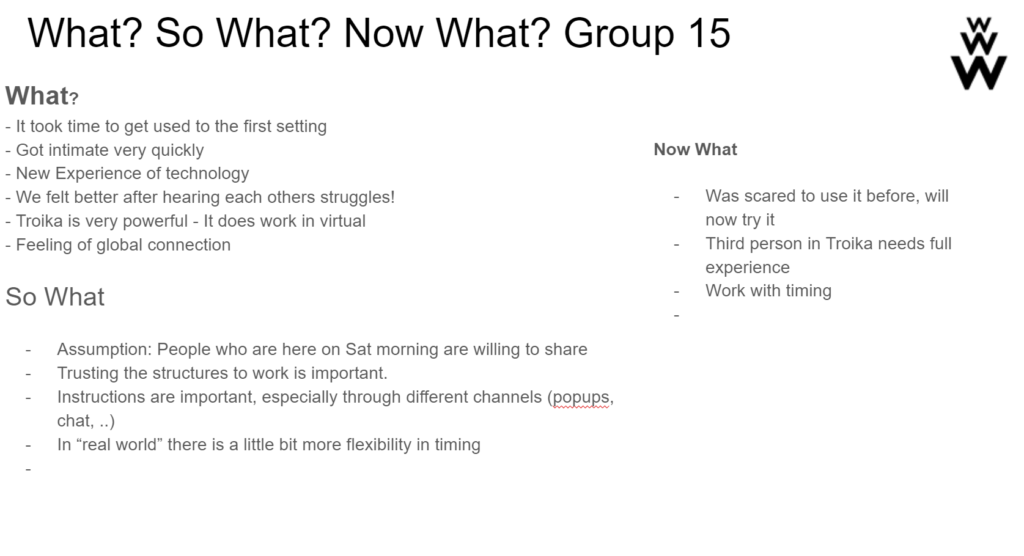
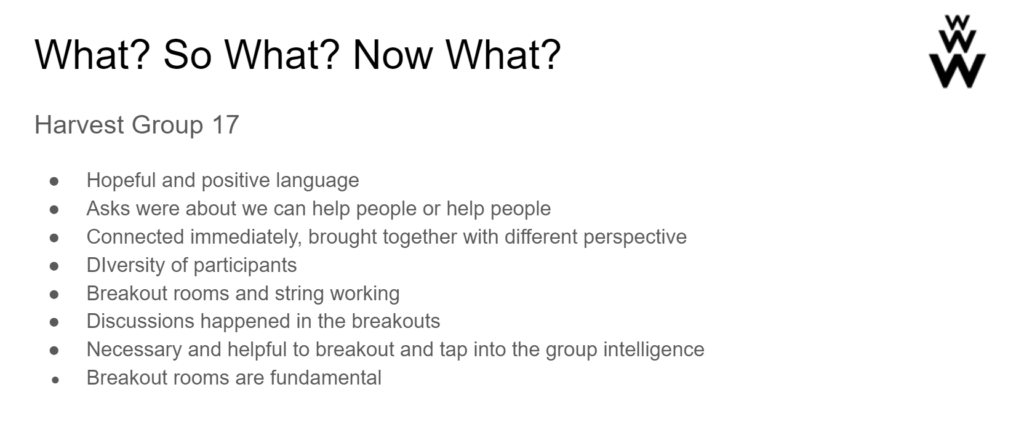
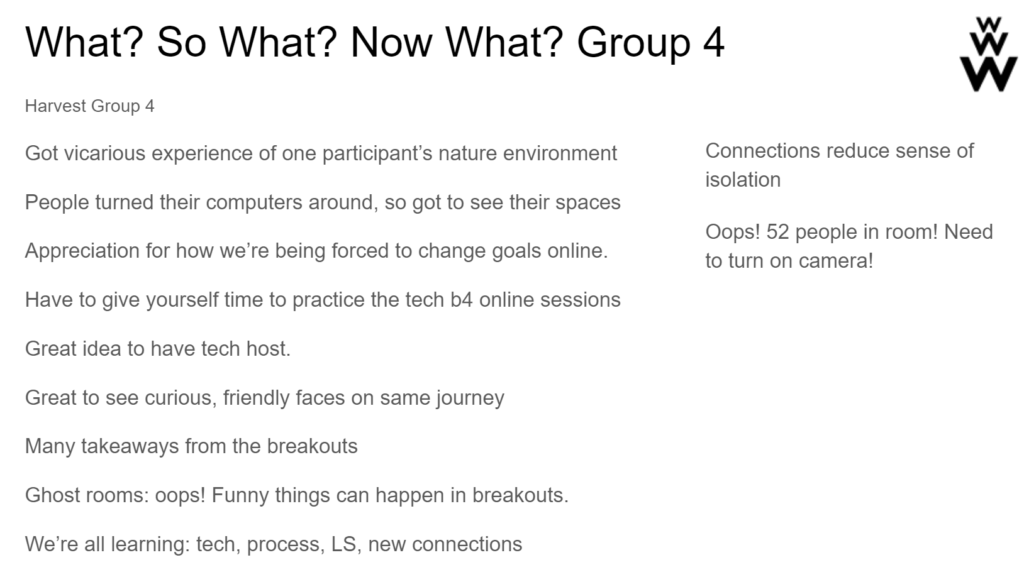
Finally, we did a VERY FAST (too fast?) What? So What? Now What? process and captured the insights in chat. I feel we could have gotten more out of this, but it was also important to stick to the 90 minute window.
When faced with new constraints, we are able to leap past our old habits, assumptions and ruts. Something new becomes possible. This is at the heart of the idea of creative destruction and DEconstruct before REconstructing.
Looking across the amazing notes of the 7 bowl groups and the overall chat, including the debrief for those who stayed on for an additional 10 minutes, I think there was a) enough value to repeat this experiment next week with another NGO, b) gather and share a bit more information for the bowl folks so everyone get dive in quickly, and c) run the experiment one more time to see which questions deserve what amount of time.
We rushed through some great stuff, probably missed some stuff and really filled the 90 minutes, but it would have been wonderful to get the bowl engaged sooner and more interaction between the fish and the bowl. It would have been really wonderful to let the fish debrief themselves before we finished. That is lot in 90 minutes.
I was surprised that some actionable ideas emerged even before we got to the action planning question #5 – particularly Liberating Structure ideas that could be used in the deconstruction and assessment elements that could pull out some of the more complex issues and help the team prioritize actionable next steps.
As I second guess myself, I need to remember that my goal was not that these experiment could be fully completed – the full deconstruct and reconstruct – in 90 minutes, but to start the process. To explore and test the process. To connect people around the process. I think many of us hungered to fully DO the process which tugs at us. We want good things for each other and results. So I need to frame that this is a starting point.
I’m not sure if anyone followed up with anyone for the matchmaking intention. We’ll see if that shows up. I plan to check back with my fishes over the coming weeks to see what happens and will invite them to write up their reflections if that is helpful.
If you would like to be the FISH in the DE/RE bowl, please leave a comment before. We have more facilitators stepping up to do more!
This is the second of a series of posts to support anyone working to move their offline/face to face group interactions online. The preamble is here. If you are an online facilitator or finding yourself in that role, join our group g here. If you are looking for resources, check here.

In the preamble, I shared my thinking that we need to avoid starting with technology, or even the redesigned agenda as we move online. To make progress, we need to pause and pay attention to what is shifting in the systems around us. Use something like the Ecocycle to get a sense of what is happening at a systems level.
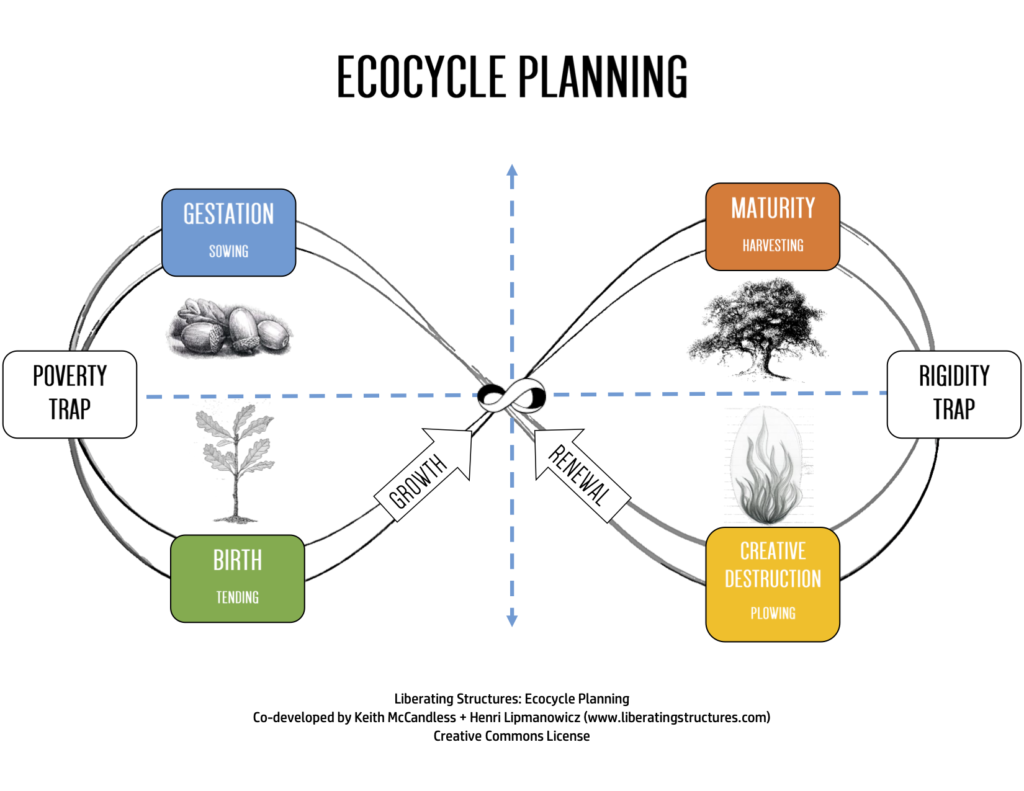
Here is a description of Ecocyle Planning from the Liberating Structures website:
Ecocycle Planning – Analyze the Full Portfolio of Activities and Relationships to Identify Obstacles and Opportunities for Progress What is made possible?
http://www.liberatingstructures.com/31-ecocycle-planning/
You can eliminate or mitigate common bottlenecks that stifle performance by sifting your group’s portfolio of activities, identifying which elements are starving for resources and which ones are rigid and hampering progress. The Ecocycle makes it possible to sift, prioritize, and plan actions with everyone involved in the activities at the same time, as opposed to the conventional way of doing it behind closed doors with a small group of people. Additionally, the Ecocycle helps everyone see the forest AND the trees—they see where their activities fit in the larger context with others. Ecocycle Planning invites leaders to focus also on creative destruction and renewal in addition to typical themes regarding growth or efficiency. The Ecocycle makes it possible to spur agility, resilience, and sustained performance by including all four phases of development in the planning process.
By seeing the whole, diving into the details, and then zooming back to the whole helps us discern a direction forward and useful first steps for moving your meetings online and especially when we are in complex contexts.
I find Ecocyle helps me focus and prioritize rather than get stuck in all the possibilities and challenges. Because it is built upon a flow, we can observe what is moving forward, what is stuck and where we may be over or under-investing our time and resources. If we spend all our time perpetuating our ok-but-not-wonderful F2F meetings with an unthinking transition to online, we may be making a total mess of things. If we pick just ONE way of going forward, we may lose sight of new, emerging possibilities. If we rush to a single solution, we may miss the possibilities of those who think differently, the positive deviants and ideas that need space to emerge. Ecocycle situates our work in flow and flux, rather than a linear to do list or rigid plan.
Just one more note before we dig in to how to do this. Sometimes we need to clear the field a bit. In this case, fear can cripple. Liberating Structures co-founder Keith McCandless’s work on LS started with superbug infection reduction in hospitals. Keith has been reflecting these past few days about the importance of getting past fear. He has created a playful process you might want to consider, a Pandemic Mad Tea. It can be a well spent 10-15 minutes and really get folks deep into their work, right from the start. (If you want to gain more insights from Keith and his infection reduction work applied to the emerging shut down of the SXSW in Austin this month. Check out this sketch. It was designed for a F2F conversation, but it gives some very specific Covid-19 context.)
How to Ecocycle Your Move to Online Meetings
In the longer term Ecocycle offers us approaches and mechanisms to adapt as conditions continue to change. In other words, there is no magic technology, group process approach or perfect online meeting template, so give that up. Right now is time for evolving!
P.S. Really pay attention to Creative Destruction. Don’t take poor meeting practices from offline into the online space. They only deteriorate! In a future post in this series I’ll share some fabulous alternatives!
P.S.S. The use of Ecocycle can help make sense at many levels. This article explores Covid-19 at the global level. https://medium.com/insurge-intelligence/coronavirus-synchronous-failure-and-the-global-phase-shift-3f00d4552940
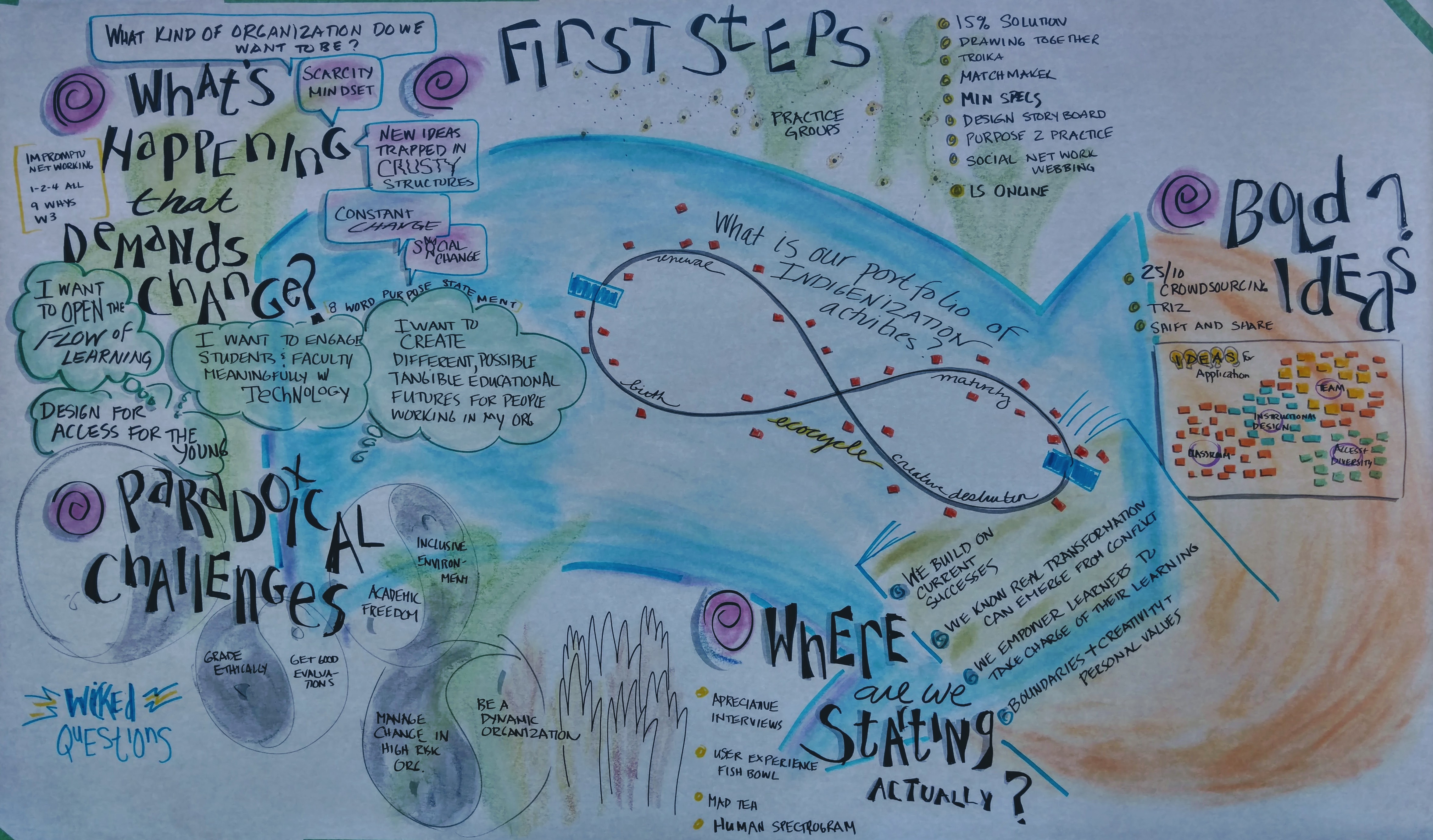
Designing in complex and emergent contexts challenges the traditional log frame approach. With a set of Liberating Structures we can create a more adaptive and actionable strategy for project design and development that contextualizes the plan into a fuller picture of the landscape within which it operates. This is a very belated follow up on the application of the process with the good folks at the University of Illinois for the INGENEAS project where we used this approach in April.
Liberating Structures are easy-to-learn microstructures that enhance relational coordination and trust. They quickly foster lively participation in groups of any size, making it possible to truly include and unleash everyone. Liberating Structures are a disruptive innovation that can replace more controlling or constraining approaches. They are engaging, easily learned and replicated and “complexity friendly.” To learn more about Liberating Structures, please visit http://www.liberatingstructures.com.
With a fully engaged and flexible approach, challenges such as complex international development projects can work with emerging contexts, rather than struggle against them. Business with rapidly changing markets can develop a portfolio of approaches to respond quickly and accurately.
As a process, participants in all parts of a system can engage, probe and sense on the ground, and loop the learning back into the strategy e for iterative improvements. Monitoring and evaluation approaches that require flexibility to work in complex contexts are designed as part of the landscape, not afterwards.
Framing the strategic planning as an adaptive landscape versus a document situates the work in its complex setting. By complex, we mean we may not be able to predict outcomes, even with extensive expertise, and only understand causality after the fact. For example, most international development work operates partially and sometimes mostly in complex settings. So the use of complexity-based approaches helps us work more productively and adaptively in these contexts.
The strategy landscape, or “knotworking” as it is increasingly called, is framed around six essential questions and held together through the Ecocycle. These questions frame, drive and help us evaluate our strategy.
The questions, particularly the focus on purpose and ambition pull a group into possibilities as they make choices and identify next steps. While they seem linear, there are feedback loops. As the group discovers new things, they may come back and modify earlier “answers.”
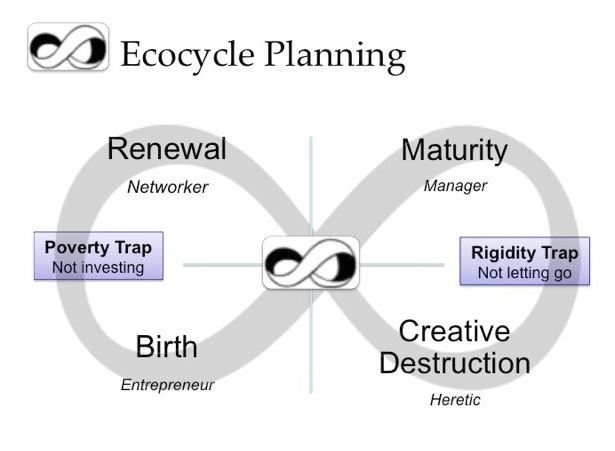
The Ecocycle provides the glue across the six questions and helps us recognize that we are always working in emerging contexts. To fully exploit knowledge and practice that has been vetted and ready for scale (maturity), we also have to pay attention to what is no longer adding value (creative destruction), what is needing to be birthed (networking) and then iteratively developing those ideas (birth) until they reach their own maturity. The Ecocycle illuminates the pulling from gestation to birth to maturity to creative destruction where strategy-and-tactics are combined. A new mindset pops into view. It can also help assess current state of activities, assets, relationships and resources, as well as identify future possible actions.
Liberating Structures are most often used in a combination. The six questions are engagingly answered through a series, or “string” of Liberating Structures. There are a range of structures that can be used for each question. Here are some examples:
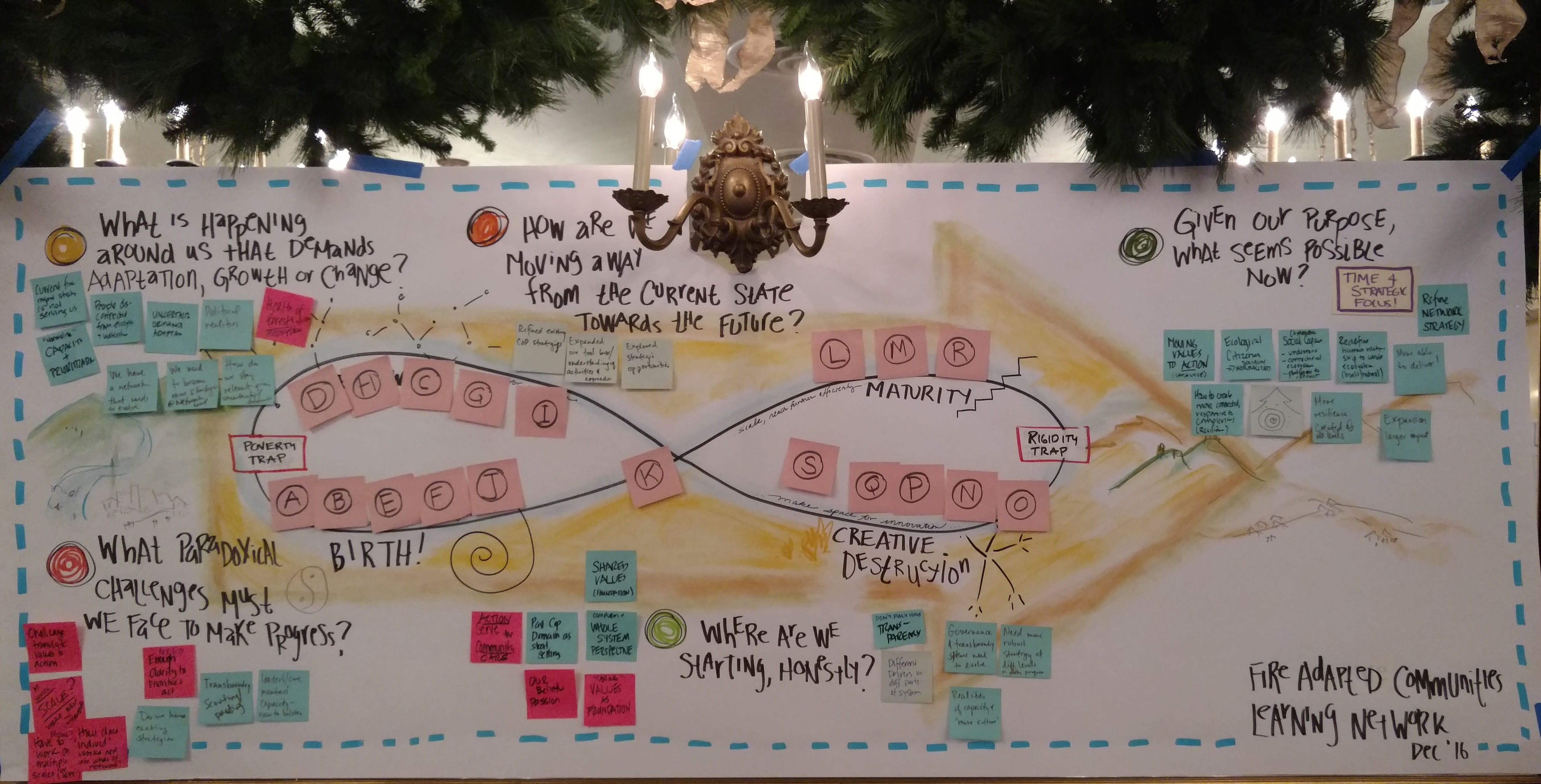
When working in complex contexts, there is often a lot to track and wrap one’s head around. Some of these things are simple next steps, clear data, and identified issues. Others are less certain. We have developed a visual canvas with Ecocycle at the center, surrounded by the six questions for capturing and making sense of the most important findings of the group as they work through the process. Keeping both the questions and the Ecocycle visible throughout the process helps ground and reground as the group progresses. Often post it notes are used so that as new data, insights, and challenges are surfaced, the canvas can be updated. At the end, there is a “story spine” that can support the telling of the strategy story to others.
The visual can be on a large piece of paper on the wall for face to face groups, or a digital artifact online with movable digital notes.
I have used this approach with a number of groups over the past three years. The results have been:

Surprising – One group not only entirely rethought their approach, but the use of Liberating Structures also reshaped their process.
Fast – Quick, iterative interactions revealed far more than traditional SWOT approaches. People are usually amazed at how much they can get done in a day in developing their strategy and implementation.This was developed off of the initial inspiration from Keith McCandless, co-founder of Liberating Structures, and conversations with Fisher Qua and Eva Schiffer. The first draft was developed to support a strategic planning workshop at the University of Illinois for the INGENEAS project.
My friend and colleague Eva Schiffer asked the most delightful question after I wrote about Facilitating in Complex Contexts. “How do you dive into and acknowledge complexity and then get s*&% done?”
I love that Eva framed this as a classic Wicked Question focusing on the AND versus either/or! I’m finally circling back to share what I learned. (Back in the writing saddle again!)
I enjoyed this article in Learning Solutions by Connie Malamed addressing push back on Design Thinking. When I’m using Liberating Structures to enable design, planning, group process in complex contexts, there is this pervasive energy that shows up around the idea that “everything is complex,” and therefore there is nothing concrete we can do.” Another type of push back.
While I could blithely respond that they are missing the point, that’s not very helpful. Connie’s article broke down some of the resistance she has experienced with Design Thinking, so borrowed her approach and see if it works when trying to bring complexity friendly approaches to facilitation. Let me know…
Criticism: If everything is always complex and changing, how do you plan?
Cure: Discern what is complex, what isn’t and what can be “nudged” to a point of greater certainty or predictability. Using Agreement-Certainty matrix, the Cynefin Framework help in that discernment. If you think of your work portfolio in the
context of an Ecocycle, there are things that are predictable (in the “Manage” quadrant”) AND there are things that must be destroyed to make room for innovation, innovation itself and the process of bringing that innovation into the Managed domain through iterative experimentation. If you can identify where each of your work processes fit in that ecocycle, you can breath a little easier because it is all connected… eventually!
Criticism: If I can’t predict outcomes, how will I know how to focus our work?
Cure: Utilize methods that help you discover possibilities in unexpected places such as Discovery and Action Dialog, those that allow you to iteratively move towards your goal or refine your goal. Consider Improv Prototyping or even Simple Ethnography. These can help us leap over our own cognitive biases — sometimes that alone is the problem, not complexity!
Cilliers wrote (again, via Chris Corrigan): “The elements interact dynamically by exchanging energy or information. These interactions are rich. Even if specific elements only interact with a few others, the effects of these interactions are propagated throughout the system. The interactions are nonlinear. ” This reminds us that our work is often non linear, even if our planning infers that it is. 😉
Criticism: If things are always changing, how do we make make ongoing decisions?
Cure: First, discern what kind of decisions you are making. Again, via Chris Corrigan / Paul Cilliers and complexity informed values: “Complex systems consist of a large number of elements that in themselves can be simple.” Understand which decisions are the simple or complicated ones and make them. For the complex elements, use methods such as Critical Uncertainties to build a portfolio of options so you are ready to make decisions to shift if the conditions change. Finally, are you even conscious about HOW you make decisions? Look at that for a few surprises!
Criticism: And now Eva’s : How do you dive into and acknowledge complexity and then get s*&% done?
Cure: Acknowledge that this is the Wicked Question and then plan your next step. The beauty of 15% Solutions and similar approaches are that you can find the AND between complexity and your next move. Use the Wenger-Trayner Value Creation framework to surface immediate value of your short term experiments rather than waiting for the “final evaluation!” You can use What, So What, Now What? to elicit the narrative fragments that can help you see the value created, even in uncertain or experimental moves.
One more from Cilliers/Chris: Complex systems are adaptive. They can (re)organize their internal structure without the intervention of an external agent. Chris notes that we must adapt – our plans, our actions, our strategies. So the bottom line is we have to move away from our adulation of certainty and just get on with it!
See also: